
HiAPI
HiAPI lets your team ship production-grade AI image, video, and audio generation with one unified API and persistent artifact storage.
Visit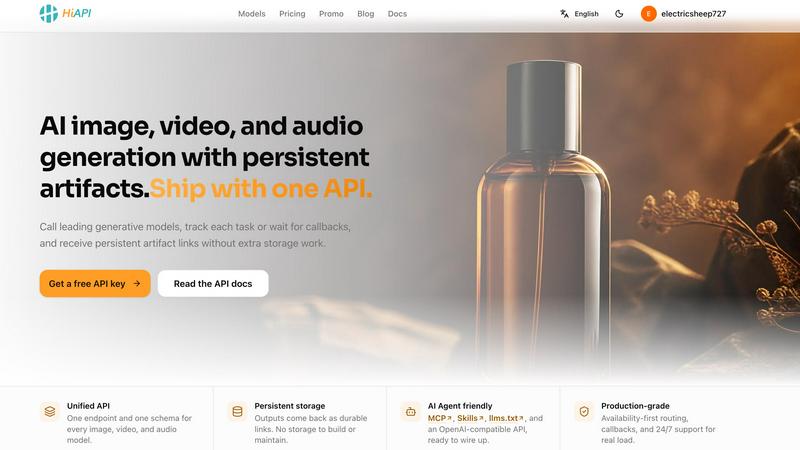
About HiAPI
HiAPI is a developer-first AI API platform designed to unify access to leading image, video, and audio generation models under a single, streamlined interface. At its core, HiAPI solves a significant challenge for development teams: the complexity of managing multiple API keys, billing systems, and integration patterns for different generative AI providers. With HiAPI, you gain access to a curated selection of top-tier models from companies like OpenAI, ByteDance, Google, and Black Forest Labs through one endpoint, one API key, and one unified billing system. This platform is built for developers, engineering teams, and AI agents who need to ship generative media features quickly and reliably into production applications. The value proposition centers on reducing integration friction: you write your code once against OpenAI-compatible requests, and HiAPI handles the rest. Outputs are delivered as persistent artifact links, eliminating the need for you to build or maintain your own storage infrastructure. The platform supports asynchronous task-based workflows with callbacks, so your team can submit generation jobs, track their status, and receive notifications without constant polling. HiAPI is also AI agent friendly, offering MCP tools, Skills, and llms.txt prompts that allow agents like Claude, Cursor, and Codex to discover and compose workflows autonomously. Whether you are building a content creation app, a video editing tool, or an AI-powered marketing platform, HiAPI enables your team to focus on your core product while leveraging the best generative AI models available, all with transparent pay-as-you-go pricing and production-grade availability.
Features of HiAPI
Unified API with One Endpoint
HiAPI provides a single API endpoint for all supported generative models, meaning your team only needs to learn one schema and one authentication pattern. Instead of managing separate integrations for GPT Image, Seedream, FLUX, or MiniMax, you pass the model name as a parameter in your request. This unified approach dramatically reduces development time and maintenance overhead. Your codebase stays clean, your onboarding for new team members is faster, and you can swap or add models without rewriting integration logic. The API supports OpenAI-compatible request formats, so if your team already works with OpenAI, the transition to HiAPI feels natural and requires minimal code changes.
Persistent Artifact Storage
Every output generated through HiAPI comes back as a durable, persistent link. This means your team does not need to build, manage, or pay for separate storage infrastructure to keep generated images, videos, or audio files. When you set the storage parameter to "persistent" in your request, HiAPI automatically stores the artifact and returns a stable URL that you can use in your application, share with users, or reference in future workflows. This feature is especially valuable for teams shipping production applications where reliable, long-term access to generated content is critical. It eliminates the complexity of integrating with S3, Cloud Storage, or CDN services, letting your engineering team focus on building features instead of managing storage.
AI Agent Friendly Integration
HiAPI is built from the ground up to work seamlessly with AI agents. The platform provides MCP (Model Context Protocol) tools, reusable Skills, and a comprehensive llms.txt prompt that agents like Claude, Cursor, and Codex can use to discover, call, and compose HiAPI workflows. Your team can paste the llms.txt prompt into an agent and have it immediately understand the available models, endpoints, and best practices. This agent-first approach enables rapid prototyping and automation. For example, your team can instruct an agent to generate a series of images with different styles, check their status, and compile the results, all through natural language instructions that the agent translates into API calls.
Production-Grade Task Lifecycle
HiAPI implements a robust task-based workflow that is designed for production reliability. Instead of simple synchronous requests, you submit a generation job as a task, receive a unique task ID, and can then check its status, wait for a callback, or poll for completion. The API supports idempotency keys, so retrying a submission does not create duplicate tasks, which is critical for handling network failures gracefully. You can specify callback URLs to receive notifications when tasks complete, eliminating the need for your team to implement polling loops. This architecture supports high-throughput scenarios and ensures that your application remains responsive even during long generation jobs. The platform also offers availability-first routing, meaning it intelligently directs requests to healthy endpoints to maximize uptime.
Use Cases of HiAPI
Content Creation Platform Integration
Your team can use HiAPI as the generative backbone for a content creation platform, enabling users to generate images, videos, and music directly within your application. By integrating the unified API, you offer a diverse range of models from a single endpoint. For example, a user could generate a product image with GPT Image 2, then create a promotional video with Seedance 2.0 that includes the generated image, and finally add background music generated by MiniMax Music 2.6. The persistent storage feature means all these artifacts are immediately available as links, which your platform can display, download, or embed without additional processing.
Automated Marketing Asset Generation
Marketing teams can collaborate with your development team to build automated workflows that generate visual assets at scale. Using HiAPI, you can create scripts that submit batch image generation tasks for social media posts, blog thumbnails, or ad creatives. The callback mechanism allows your system to automatically process completed tasks, for example, by resizing images or uploading them to a CMS. The transparent pricing helps your team estimate costs before launching a campaign, and the unified billing means you have a single invoice for all generative AI usage, simplifying budget tracking across your organization.
AI-Powered Video Editing Tool
For a team building a video editing application, HiAPI provides the generative models needed for features like text-to-video, image-to-video, and AI-powered audio generation. Your application can use Seedance 2.0 to generate short video clips from text descriptions, then layer in music from MiniMax Music 2.6. The task-based API is ideal for this use case because video generation can take time, and your application can show progress to users by polling the task status or listening for callbacks. The persistent artifact links ensure that generated videos are stored reliably and can be referenced in project timelines without requiring your team to manage large video file storage.
AI Agent Workflow Automation
Teams building AI agents or copilots can leverage HiAPI to give their agents the ability to generate media. Using the MCP tools or llms.txt prompt, your agent can autonomously decide which model to call based on a user's request. For instance, an agent assisting a designer could generate multiple image variations with FLUX 1.1 Pro, then create a video montage with Seedance 2.0, and produce a soundtrack with MiniMax Music 2.6, all through a single HiAPI integration. This use case is particularly powerful for internal productivity tools where agents handle routine creative tasks, freeing your human team to focus on higher-level strategy and decision-making.
Frequently Asked Questions
How does HiAPI handle billing and pricing for multiple models?
HiAPI offers a unified billing system where you receive a single invoice for all your usage across different models. Each model has its own transparent per-request pricing, which is displayed on the platform so your team can estimate costs before integrating. You use a single API key and one account for all models, and billing is handled on a pay-as-you-go basis. This means you only pay for what you use, with no upfront commitments or hidden fees. The platform also offers free credits for new users to test and evaluate models before committing to a paid plan.
Can I use HiAPI with existing OpenAI code in my application?
Yes, HiAPI is designed to be compatible with OpenAI request formats, making it easy to integrate into applications that already use OpenAI APIs. Your team can often switch to HiAPI with minimal code changes, primarily by updating the base URL and API key. This compatibility extends to the request and response structures, so your existing code for handling prompts, parameters, and outputs can be reused. This feature significantly reduces migration effort and allows your team to add new models without rewriting your application's AI integration layer.
What happens if a generation task fails or takes too long?
HiAPI uses a task-based system that provides robust error handling and retry logic. If a task fails, the API returns an error status, and you can inspect the response for details. You can resubmit the task using the same idempotency key to avoid duplicate charges. For long-running tasks, you can either poll the task status endpoint or set up a callback URL to be notified when the task completes. The platform is designed for production-grade reliability, with availability-first routing that directs requests to healthy endpoints to minimize failures.
How does persistent storage work and what are the costs?
When you set the storage parameter to "persistent" in your request, HiAPI stores the generated artifact and returns a durable link that you can use indefinitely. This storage is included as a low-cost option within the platform, meaning you do not need to set up your own storage infrastructure like S3 or Cloud Storage. The exact cost for persistent storage is transparent and tied to the model's pricing. This feature is especially useful for applications that need to reference generated content over time, such as in user galleries, project archives, or content management systems.
Pricing of HiAPI
HiAPI operates on a transparent pay-as-you-go pricing model. Every model on the platform lists its price per request upfront, allowing your team to estimate costs before integrating. New users receive up to $1 in free credits to test models and evaluate the platform. There are no monthly subscription fees or minimum commitments, so you only pay for the requests you make. Billing is unified across all models, meaning you receive a single invoice for your entire usage. For detailed pricing of specific models like Seedream 5.0 Pro, GPT Image 2, or Seedance 2.0, your team can visit the model details page on the HiAPI website to check current API usage, parameters, and per-request pricing.
Similar to HiAPI

nanobanana 21
Fast, simple image creation and editing with accurate details, readable text, consistent characters, and up to 14 reference images.

AI Object Remover
Remove unwanted people, objects, text and watermarks from photos with AI

Genjutsu AI
Genjutsu AI turns your ideas into cinematic videos, product ads, social media shorts, and high-quality images in minutes. Choose a model, describe you

Raindance AI
Turn two authorized portraits into a seaside golden-hour video: a wooden dock, two people taking turns singing, and a slow pullback to the sunset. Pre

AI Album Cover Maker
Create release-ready album covers from a prompt or photo. Generate, refine, and export art for singles, EPs, mixtapes, and playlists.
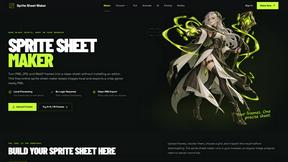
Sprite Sheet Maker
A free browser-based toolkit for creating, cutting, converting, and previewing sprite sheet animations.

Meigen AI
Create and edit AI images and videos with leading models in one workspace.

GPT Image 2 API
Generate and edit production-ready images with GPT Image 2 API, clear text rendering, reference images, and developer-friendly API workflows.