
Tuning Engines
Tuning Engines helps teams manage software agents and robots with shared identity, policy, telemetry, and outcome-based cost reporting.
Visit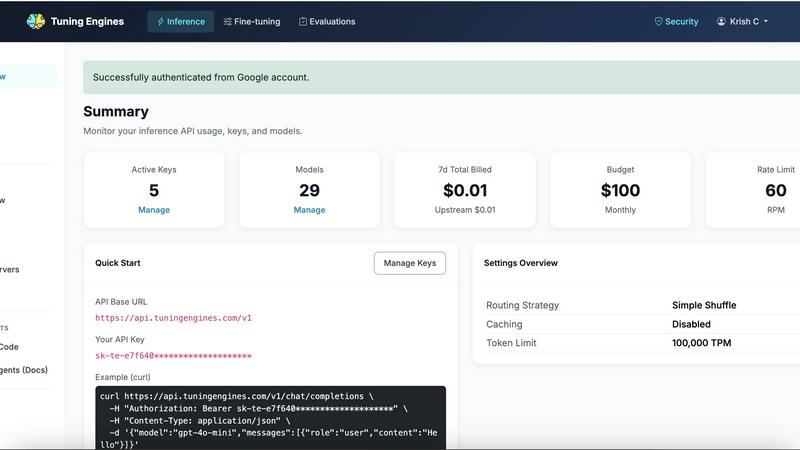
About Tuning Engines
Tuning Engines focuses on the management gap created when software agents and robots take actions across business systems and physical environments. It provides a shared model for registering workers, assigning owners, issuing credentials, and recording activity. A team can use that model to bring permissions, observability, compliance tracking, and cost reporting into the same operating view.
The central deployment choice is whether to observe or intervene. Sidecar mode collects traces and telemetry out of band and is described as the available mode for robots. Proxy mode routes software-agent calls through an OpenAI-compatible endpoint so policy checks, sensitive-action approvals, routing, and budget caps can apply inline. The product page says runtime security and compliance for robots is coming soon, which is a meaningful constraint for organizations that need preventive controls on physical systems now.
Tuning Engines also positions evaluations, datasets, fine-tuning, and model routing as ways to improve the workforce over time. Its stated audiences include CFOs, CIOs, security teams, and AI platform or robotics operations. Its pricing model is unclear.
Features of Tuning Engines
- One identity and policy model for software agents and robots.
- Sidecar monitoring with traces and telemetry collected outside the request path.
- Proxy enforcement for software-agent calls, including approvals and per-request budget caps.
- Spend attribution tied to workers, teams, sessions, and outcomes.
Use Cases of Tuning Engines
- Create ownership and permission records for autonomous workers.
- Capture robot telemetry and software-agent traces in a common oversight view.
- Require approval for sensitive software-agent actions before they run.
- Give finance teams cost reporting organized around outcomes rather than token totals.
Frequently Asked Questions
Can teams start without routing requests through the product?
Yes. Sidecar mode is described as out-of-band and does not change traffic, providing traces and telemetry.
What does proxy mode add?
For software agents, it routes calls through Tuning Engines so policy checks, approvals, routing, and budget caps can be applied inline.
Does the evidence include pricing?
No clear price or pricing model appears in the provided official evidence.
Similar to Tuning Engines
Testsy
Testsy checks AI-built websites and mobile apps, with replayable test runs and repair prompts for failed user flows.
DatafetchPro
DatafetchPro creates custom web scrapers, browser automations, and API pipelines that turn repetitive tasks into structured, delivered data.
Bolts
BuildItOmi retired Bolts on 28 November 2026; former users can export their product data, run history, and contacts through 28 December 2026.

Leadmatically
Leadmatically finds potential buyers discussing their needs on social platforms and helps businesses start conversations from one inbox.
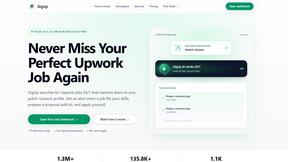
GigUp
GigUp monitors Upwork searches, explains how new jobs match a freelancer's profile, and sends alerts while users retain control of applications.

Ragdom Venture
Ragdom Venture develops custom digital products for businesses, including web apps, mobile apps and AI workflows, with project or partner engagements.
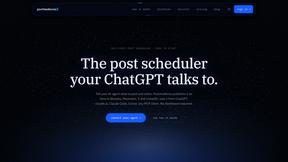
Postmoderno
Postmoderno schedules social posts from ChatGPT, Claude and other MCP clients, with previews for each platform before publishing.
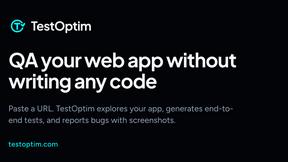
TestOptim
TestOptim uses AI to explore web apps, generate end-to-end tests, and report reproducible bugs with screenshots, without requiring code or an SDK.