
Customer Feedback
Work together to collect and showcase customer feedback that builds trust and closes sales for you.
Visit
About Customer Feedback
Customer Feedback is a collaborative platform designed to transform how product teams gather, understand, and act on user insights. It moves beyond simple survey tools to create a unified, team-oriented system for continuous customer discovery. Built for modern SaaS companies, startups, and product teams, it empowers organizations that believe building the right features requires deep, ongoing collaboration with their user base. The core value proposition lies in unifying disparate feedback channels—like support tickets, app store reviews, survey forms, and website widgets—into a single source of truth. This fosters powerful synergy between product, marketing, and support teams, ensuring everyone is aligned on real user needs. By leveraging AI to cut through the noise and identify the most impactful opportunities, the platform turns raw customer voices into a powerful engine for data-driven decisions. It makes it easy to collect feedback everywhere, analyze it intelligently, and close the loop with users, ultimately enhancing satisfaction and driving product growth through a truly collaborative development process.
Features of Customer Feedback
Unified Feedback Hub
This feature consolidates all customer input from various channels like in-app widgets, email forms, support tickets, and public review sites (Google, G2) into one centralized dashboard. It breaks down silos, allowing product, support, and marketing teams to collaborate from a single source of truth. This unified view eliminates the chaos of scattered data and ensures no valuable insight is lost or overlooked by a single department.
AI-Powered Insight Analysis
Stop drowning in raw comments and data. This intelligent feature uses AI to automatically analyze large volumes of feedback, spotting trends, sentiment, and common themes. It helps teams quickly identify the most requested features or pressing pain points, cutting through the noise to highlight the opportunities that will have the greatest impact on user satisfaction and product growth.
Automated Collection & Display
Automate the tedious process of chasing reviews. The platform can automatically collect feedback via customizable widgets and forms. Furthermore, it allows you to seamlessly display your best, most trustworthy reviews and testimonials directly on key conversion pages like checkout or pricing. This social proof builds instant credibility and helps close sales by letting your customers do the pitching for you.
Closed-Loop Update Sharing
Building what users want is only half the battle. This feature enables teams to easily announce product updates, new features, and fixes directly to the users who requested them. By closing the feedback loop, you show customers they are heard, build tremendous trust, and keep them excited and engaged with your product's evolution, fostering a collaborative partnership.
Use Cases of Customer Feedback
Prioritizing Product Roadmaps
Product teams can use the unified hub and AI analysis to move from guesswork to data-driven planning. By seeing aggregated feedback from all touchpoints, they can clearly identify the most frequent and impactful user requests. This allows the entire team to collaboratively prioritize the development backlog, ensuring they build the features that truly matter to their user base and drive adoption.
Boosting Sales Conversion with Social Proof
Marketing and sales teams can leverage the platform to automatically display verified, high-quality customer reviews and ratings on critical website pages. Showcasing real proof from peers directly on pricing and checkout pages reduces perceived risk for potential customers, builds instant trust, and effectively lets happy customers help close more sales for you.
Enhancing Customer Support & Success
Support teams can contribute and access user feedback directly within the platform, tagging common issues or frustrations. This collaboration helps identify widespread problems that need a product fix, not just a support response. It also allows success teams to proactively reach out to users who have provided feedback, strengthening relationships and reducing churn.
Building a Collaborative Customer-Centric Culture
The platform serves as a central nexus for company-wide alignment on the customer voice. By making feedback visible and actionable across departments—from product and engineering to marketing and execs—it fosters a shared understanding of user needs. This breaks down internal silos and cultivates a unified, cooperative culture focused on collective action based on real insights.
Frequently Asked Questions
How does Customer Feedback differ from a simple survey tool?
While survey tools collect data in isolation, Customer Feedback is a collaborative ecosystem. It unifies feedback from surveys, support tickets, reviews, and in-app widgets into one platform. Its core difference is the focus on team-wide synergy and AI-powered analysis, helping cross-functional teams not just collect, but truly understand and act on insights together, turning feedback into a strategic asset.
Is technical knowledge required to set up the feedback widgets?
No, the platform is designed for ease of use by all team members. Setting up feedback collection widgets, forms, or review displays on your website or app requires no coding. You can typically install a snippet or use a simple integration to get started in under 5 minutes, allowing your team to focus on insights, not implementation.
Can we really close the loop with users who give feedback?
Absolutely. A key feature is the ability to share updates directly with your user community. When you release a new feature or fix based on customer input, you can announce it within the platform. Users who contributed related feedback can be notified, showing them that their voice led to real change. This transparent process builds incredible loyalty and trust.
How does the AI analysis help my team save time?
Manually sifting through hundreds of comments and tickets is inefficient. The AI analysis automatically processes all incoming feedback, clustering similar comments, detecting sentiment (positive, negative, neutral), and surfacing recurring themes and trends. This gives your team a clear, actionable summary, allowing you to spend less time organizing data and more time collaborating on strategic decisions.
Explore more in this category:
Similar to Customer Feedback
Produktly
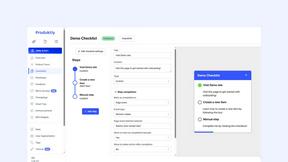
One no-code tool for onboarding, announcements, and feedback: tours, checklists, changelogs, roadmaps, and NPS for SaaS teams.
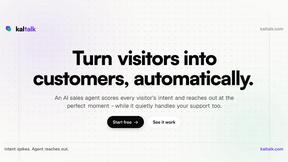
KalTalk
KalTalk teams up with you to resolve support tickets and score visitor intent so one AI agent handles both service and sales.
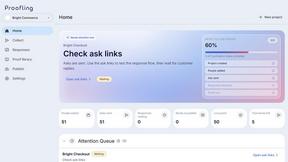
Proofling
Proofling works with you to automatically collect, follow up on, and publish verified customer testimonials so your proof builds itself.

Unio Digital
Unio Digital unites managed IT, low voltage cabling, and security under one team for streamlined operations and integrated solutions.
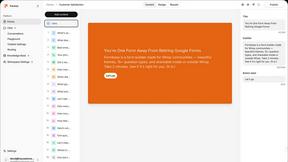
Formzz
Formzz unites your team with forms, chat, and scheduling to capture and perfectly route every lead together.