ScopeGuard vs Tickari
Side-by-side comparison to help you choose the right product.

ScopeGuard is your AI partner that tracks scope creep to protect your freelance revenue.
Last updated: February 28, 2026

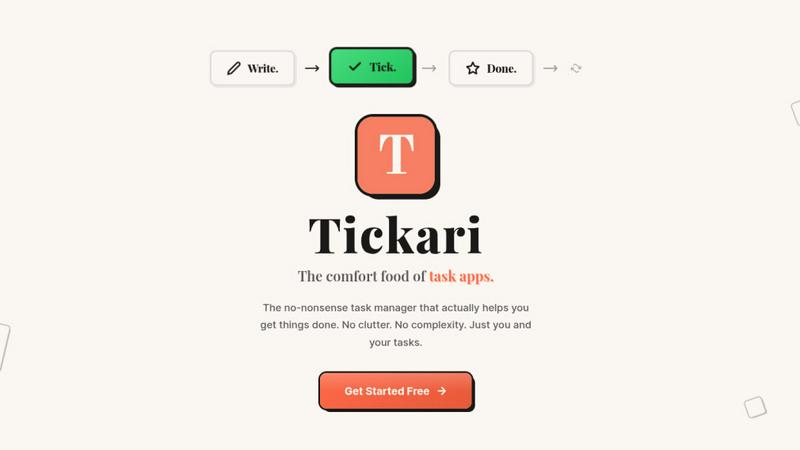
The no-nonsense task manager that actually helps you get things done. No clutter. No complexity. Just you and your tasks.
Visual Comparison
ScopeGuard

Tickari
Overview
About ScopeGuard
ScopeGuard is a collaborative AI-powered platform designed to be a proactive partner for freelancers and independent contractors, transforming the way they manage project boundaries. It directly addresses the silent profit killer known as scope creep—those small, unapproved requests that add up to significant unpaid work. The tool is built for the modern professional who uses web-based tools like Gmail, Slack, and Asana, seamlessly integrating into your existing workflow via a Chrome extension. At its core, ScopeGuard allows you to instantly verify if a client's new request aligns with your original contract or statement of work. By providing clear, AI-driven analysis and a streamlined system for logging and approving out-of-scope work, it turns potential conflicts into opportunities for transparent, cooperative conversations. The value proposition is powerful and clear: recover an average of $5,000+ in lost annual revenue by ensuring you get paid for every bit of value you deliver. ScopeGuard fosters a more synergistic and professional partnership with your clients, ensuring every hour of work is properly accounted for and billed, ultimately protecting your hard-earned revenue.
About Tickari
Tickari is a deliberately minimal, no-nonsense task manager designed for people who are tired of overcomplicated productivity tools and just want to get things done. Instead of overwhelming you with features like complex boards, AI-generated suggestions, or endless customization, Tickari focuses on a simple, frictionless workflow: write a task, tick it off, and move on.
The product embraces a “less but better” philosophy—eliminating clutter, reducing cognitive overhead, and removing the need for onboarding tutorials or setup processes. There are no distractions, no unnecessary decisions, and no feature bloat—just a clean interface that works instantly the moment you open it. This makes it particularly effective for users who feel stuck organizing tasks instead of actually completing them.