
Oneprofile vs SERPView
Side-by-side comparison to help you choose the right product.

Oneprofile
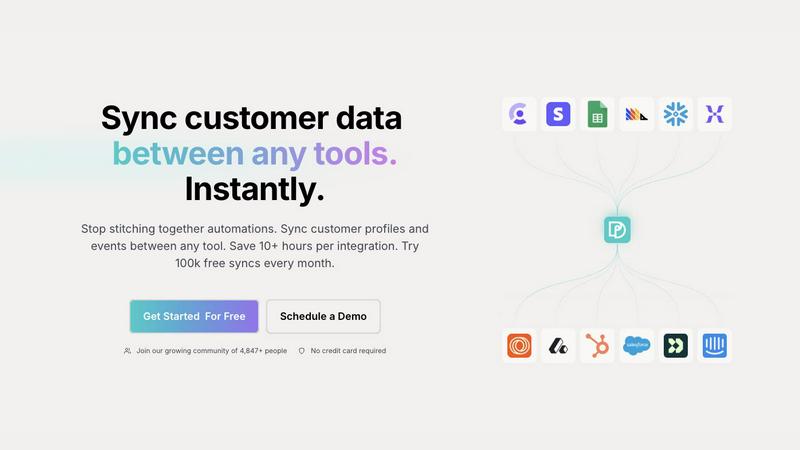
Oneprofile syncs customer profiles and events across tools, ensuring consistent data and saving you valuable time.
Last updated: February 28, 2026

SERPView
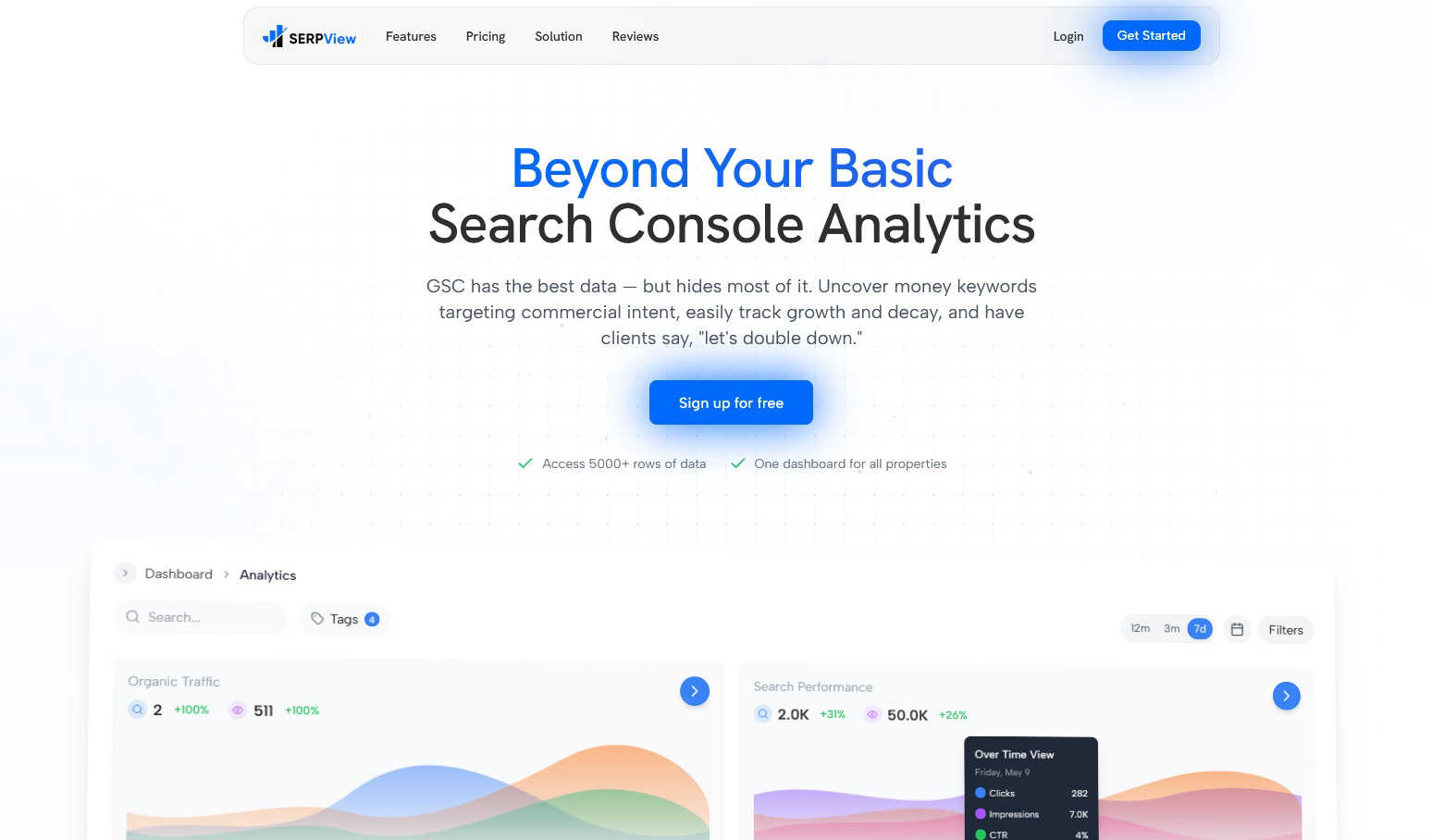
SERPView unlocks your team's shared Google Search Console data to uncover growth opportunities together.
Last updated: March 1, 2026
Visual Comparison
Oneprofile
SERPView
Feature Comparison
Oneprofile
Unified Customer Profiles
Oneprofile excels at consolidating customer profiles from various tools into a single, coherent model. This unification ensures that every system references the same customer data, which enhances collaboration across departments and improves decision-making.
Identity Resolution
With Oneprofile, you can avoid duplication and data drift between systems. The identity resolution feature intelligently matches identities and fields across different tools, allowing for consistent referencing of customer profiles and events as data evolves.
Custom Data Flow Control
Oneprofile gives users the power to define how data moves between systems. You can easily map fields, control sync direction, and determine how updates propagate, tailoring the data flow to match your business operations instead of forcing rigid schemas.
Smart Field Mapping
The smart field mapping feature simplifies the integration process by automatically or manually mapping fields between different systems. This ensures that you can connect disparate tools quickly and efficiently, minimizing the time spent on setup.
SERPView
Performance Tracking Without Limits
Go beyond Google Search Console's restrictive 1,000-row data cap. SERPView provides access to a comprehensive 50,000 rows of performance data, allowing your team to track clicks, impressions, CTR, and average position in granular detail without any artificial limitations. This ensures you can analyze long-term trends and spot opportunities that would otherwise remain hidden in truncated reports.
Advanced Keyword & Page Analysis
Uncover high-intent, money-making keywords and identify your best-performing pages. This feature enables deep dives into commercial keyword opportunities, tracks position changes over time, and analyzes page-level performance to pinpoint both optimization opportunities and content that deserves further promotion, creating a clear action plan for your content and SEO teams.
Mobile vs. Desktop & International Analysis
Compare your search performance across different devices and geographical regions. Understand whether your site performs better on mobile or desktop to guide technical and content optimizations. Simultaneously, track impressions and clicks by country to refine your global SEO strategy and allocate resources effectively for international campaigns.
Collaborative Topic Clusters & Annotations
Visualize and track the performance of your entire content strategy by topic clusters, not just individual pages. This fosters alignment between content and SEO teams on strategic themes. Furthermore, the ability to track Google algorithm updates and add custom annotations helps your team correlate ranking changes with specific events, fostering shared understanding.
Use Cases
Oneprofile
Marketing Automation
In marketing, Oneprofile can be used to sync customer data between various platforms, allowing marketers to create targeted campaigns based on unified customer profiles. This ensures that every interaction is personalized and relevant, improving customer engagement.
Sales Enablement
Sales teams can leverage Oneprofile to maintain an accurate view of customer interactions across different stages of the sales funnel. By syncing events and profiles, sales representatives can access the most current information, enhancing their ability to close deals effectively.
Customer Support
Customer support teams benefit from Oneprofile by having immediate access to consistent customer data across all support tools. This ensures that agents can provide informed assistance, improving overall customer satisfaction and resolution times.
Product Analytics
For product teams, Oneprofile enables the synchronization of user data across various analytics tools. This allows for a more comprehensive understanding of user behavior, aiding in product development and feature enhancement based on accurate insights.
SERPView
SEO Team Collaboration & Reporting
Centralize search data from multiple GSC properties into one dashboard, eliminating silos. SEO managers, specialists, and analysts can work from the same dataset, create shared tags, and generate comprehensive reports that provide a unified view of performance, streamlining communication and strategic planning across the team.
Content Strategy Development & Optimization
Content teams can use page and keyword analysis to identify top-performing articles and uncover gaps. By reviewing topic cluster performance, they can prioritize content creation around winning themes and update underperforming pages based on concrete search data, ensuring their efforts align with actual search demand and team goals.
Technical SEO & Site Performance Review
Technical SEOs can leverage device comparison data to identify potential mobile usability issues impacting rankings. The extensive data access allows for deep dives into query counting and position changes, helping pinpoint technical crawl, index, or rendering problems that need to be addressed in collaboration with developers.
Agency Client Management & Reporting
Digital marketing agencies managing multiple client accounts can connect all properties to a single SERPView dashboard. This simplifies performance reviews, enables efficient cross-client benchmarking, and allows for the creation of clear, data-rich reports that demonstrate value and guide collaborative strategy sessions with clients.
Overview
About Oneprofile
Oneprofile is an innovative data synchronization tool designed to streamline how businesses manage customer profiles and events across various platforms. By eliminating the discrepancies that arise when different systems maintain their own versions of customer data, Oneprofile ensures that all customer information is unified and up-to-date in real time. This capability is vital for organizations that rely on multiple software tools for customer relationship management (CRM), analytics, support, and marketing. Oneprofile's main value proposition lies in its ability to save time and reduce errors, allowing teams to focus on delivering exceptional customer experiences rather than dealing with data inconsistencies. Whether you are a small startup or a large enterprise, Oneprofile adapts to your unique data flow needs, providing a seamless integration experience without the hassle of manual pipelines or broken integrations.
About SERPView
SERPView is the definitive collaborative analytics platform designed to unlock the full potential of your Google Search Console data. It transforms the fragmented, limited experience of the native GSC interface into a centralized, data-rich command center built for SEO teams and digital marketers. The platform is engineered for seamless cooperation, empowering your entire team—from content creators and SEO specialists to marketing strategists—to move beyond basic reporting and uncover the actionable insights that drive strategic, unified growth. Its core value proposition lies in breaking through GSC's restrictive 1,000-row data limit, providing access to over 50,000 rows of performance data to ensure no critical trend or opportunity goes unnoticed. By consolidating all your search properties into a single, intuitive dashboard, SERPView eliminates the hassle of switching between accounts and enables unified analysis. It fosters synergy across departments by turning raw search data into a shared source of truth, complete with advanced features for in-depth keyword analysis, page performance reviews, device comparisons, and visual topic cluster tracking, making it a powerful engine for collaborative decision-making.
Frequently Asked Questions
Oneprofile FAQ
How does Oneprofile keep customer data synchronized?
Oneprofile uses automated syncing to ensure that any changes made to customer data in one tool are instantly reflected across all connected systems, eliminating discrepancies and ensuring consistency.
Can I customize how data is synced between tools?
Yes, Oneprofile allows users to define custom data flows, including mapping fields and controlling sync directions, which lets you tailor the integration to your specific business needs.
Is it easy to set up Oneprofile with my existing tools?
Absolutely! Oneprofile is designed for seamless integration with various SaaS tools and databases, making setup straightforward and user-friendly, with no need for extensive technical expertise.
What kind of support does Oneprofile offer?
Oneprofile provides a range of support options, including documentation, live chat, and dedicated customer success teams, ensuring that you receive assistance whenever needed to maximize your experience with the tool.
SERPView FAQ
How is SERPView different from Google Search Console?
While Google Search Console (GSC) is the source of the data, it has significant limitations like a 1,000-row data cap, disjointed property management, and limited historical analysis. SERPView builds upon GSC data by removing these limits, providing a unified dashboard for all properties, and adding advanced collaborative features like topic clustering, detailed device/country breakdowns, and annotation tools that GSC does not offer.
Can I connect multiple Google Search Console properties?
Yes, absolutely. A core feature of SERPView is the ability to connect and manage multiple Google Search Console properties, websites, and domains from within a single, intuitive dashboard. This eliminates the need to constantly switch between accounts and provides a consolidated view of your entire search ecosystem for streamlined team analysis.
What is the "50,000 row data limit" you mention?
Google Search Console's native interface typically limits you to viewing and exporting only 1,000 rows of performance data at a time, which can hide important long-tail keywords and trends. SERPView bypasses this restriction by aggregating data via the API, allowing you to access, analyze, and export up to 50,000 rows of data, ensuring a much more complete picture of your search performance.
Is SERPView suitable for team use?
SERPView is specifically designed for team collaboration. It transforms individual GSC data into a shared source of truth with features that foster synergy. Teams can work from a centralized dashboard, use tagging for organization, track topic strategies together, and use annotations to align on the impact of site changes or algorithm updates, making it ideal for coordinated SEO efforts.
Alternatives
Oneprofile Alternatives
Oneprofile is a powerful tool designed to sync customer profiles and events across various platforms that a company utilizes, ensuring seamless connectivity between CRMs, analytics, support, and marketing systems. As organizations grow and evolve, they often find that their data needs change, leading them to explore alternatives that may better suit their current requirements, whether due to pricing concerns, feature sets, or specific platform compatibility. When searching for an alternative to Oneprofile, it’s essential to consider not only the core features, such as data synchronization and integration capabilities but also factors like ease of use, scalability, and customer support. A collaborative environment where teams can efficiently share and access the right data at the right time is crucial for maintaining operational synergy and achieving business goals.
SERPView Alternatives
SERPView is a collaborative analytics platform designed to transform how teams use Google Search Console data. It centralizes search performance insights, breaking through data limits to foster team-wide analysis and strategic growth. Users often explore alternatives for various reasons, such as budget considerations, the need for different feature sets, or integration requirements with their existing tech stack. Finding the right tool fit is a common step in optimizing a team's workflow. When evaluating other options, prioritize solutions that enhance team synergy. Look for unrestricted data access, centralized reporting, and features that turn complex data into clear, actionable insights for your entire group.