Fusedash vs qtrl.ai
Side-by-side comparison to help you choose the right product.

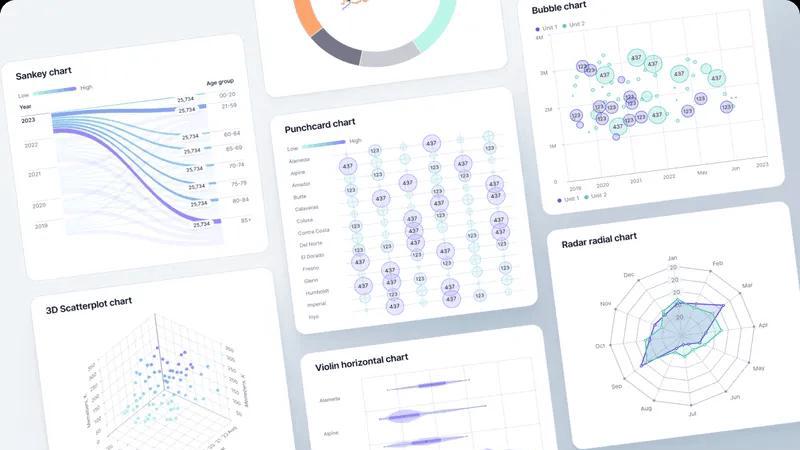
Fusedash turns your team's data into clear dashboards so everyone can act on insights together.
Last updated: March 4, 2026

qtrl.ai
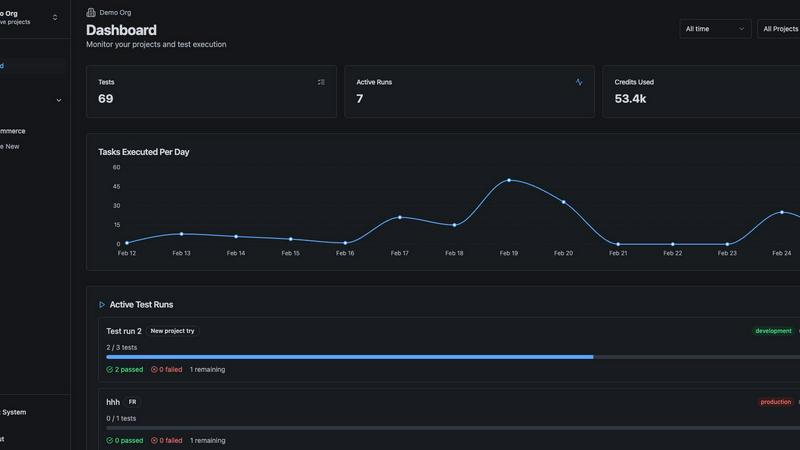
qtrl.ai helps QA teams scale testing with AI agents while maintaining full control and governance.
Last updated: March 4, 2026
Visual Comparison
Fusedash
qtrl.ai
Feature Comparison
Fusedash
Flexible, Unified Workspace
Fusedash provides a single, cohesive workspace where teams can build the right view for every audience without duplicating effort. You can transform the same core dataset into interactive dashboards for real-time monitoring, detailed charts for analysis, narrative reports for stakeholders, or geographic maps for regional insights. This flexibility allows different departments to access the information that matters most to them, all from a consistent data foundation, reducing back-and-forth and ensuring seamless collaboration across the organization.
AI-Powered Chart Generator
Jumpstart your data storytelling with the AI Chart Generator. This feature allows you to create clear, impactful visuals from your CSVs or connected APIs in minutes. The AI assists in selecting the optimal chart type, applying meaningful comparisons, and refining labels to ensure the visual accurately tells your data's story. These charts can be used as powerful standalone assets or seamlessly integrated into larger dashboards and reports, accelerating the path from raw data to shared understanding.
Integrated AI Data Chat
Foster a collaborative exploration environment with the integrated AI Data Chat. Team members can ask questions about their data in plain, natural language, breaking down barriers to analysis. The smart chat can suggest relevant metrics, propose breakdowns, and recommend the best chart types for your inquiry. You can then instantly turn these conversational insights into permanent, shareable dashboard views, making data discovery an intuitive and cooperative process for everyone.
Consistent Metric Definitions & Reusability
At the heart of Fusedash is the principle of consistency. You define your key performance indicators, dimensions, and calculation logic once in a centralized library. These trusted definitions are then automatically reused across every dashboard, chart, and report created on the platform. This eradicates conflicting numbers and manual reconciliation, ensuring that leadership, marketing, and operations are all working from the same trusted dataset, which builds alignment and accelerates collective action.
qtrl.ai
Enterprise-Grade Test Management
qtrl provides a centralized, collaborative hub for all your testing activities. Your team can work together to organize test cases, plan comprehensive test runs, and maintain full traceability from requirements to coverage. This structured foundation, built with compliance and auditability in mind, gives everyone clear visibility into quality status, helping you manage risk as a unified group.
Progressive AI Automation
This feature allows your team to adopt automation at your own pace, working in synergy with AI. Start by writing high-level test instructions for the AI to execute. As trust builds, leverage qtrl to generate full test scripts from plain English, which your team can review and approve. The platform even suggests new tests based on coverage gaps, making automation a collaborative, step-by-step journey.
Autonomous QA Agents
qtrl's intelligent agents act as an extension of your team, executing test instructions on demand or continuously across multiple browsers and real environments. They operate within the rules and permissions your team sets, providing scalable execution power without hidden "black-box" decisions. This allows human testers to focus on complex scenarios while agents handle repetitive tasks.
Adaptive Memory & Multi-Environment Execution
The platform builds a living, shared knowledge base of your application by learning from every exploration, test run, and issue. This collective intelligence powers smarter, context-aware test generation that improves over time. Coupled with the ability to run tests seamlessly across development, staging, and production environments with secure secrets management, your team ensures consistent quality at every stage.
Use Cases
Fusedash
Cross-Departmental KPI Alignment
Unify your organization around shared goals by creating a central command center. Leadership can monitor high-level business health on executive dashboards, while marketing drills into campaign performance and operations tracks real-time logistics—all using the same underlying metrics. This eliminates siloed reporting and ensures every team discussion is grounded in a single, consistent version of the truth, driving strategic alignment.
Streamlined Stakeholder Reporting
Transform the tedious monthly reporting cycle into an efficient, collaborative process. Build narrative-driven "storytelling" reports that combine live charts, key metrics, and explanatory text. Share these dynamic reports with stakeholders, who can interact with filters and see the most current data without waiting for a new document. This empowers teams to provide context and clarity, reducing follow-up questions and fostering better-informed decisions.
Collaborative Market & Geographic Analysis
Enable sales and marketing teams to visually analyze performance by region using interactive maps. By combining internal sales data with public demographic or market data within Fusedash, teams can collaboratively identify trends, pinpoint opportunities, and allocate resources effectively. This shared geographic insight helps regional managers and headquarters align on strategy and execute locally relevant actions.
Rapid, Ad-Hoc Data Exploration
Empower every team member to be a data explorer. When a question arises in a meeting, use the AI Data Chat to ask "What drove the sales spike last week?" or "Show me user sign-ups by device type." Instantly generate charts and breakdowns to answer these questions on the fly. This democratizes data access, turns curiosity into immediate insight, and fosters a proactive, data-informed culture across all teams.
qtrl.ai
Scaling Beyond Manual Testing
For QA teams overwhelmed by repetitive manual checks, qtrl offers a cooperative path forward. Teams can begin by structuring their existing manual cases in the platform, then gradually introduce AI agents to automate the most time-consuming scripts. This collaborative approach allows testers to upskill and focus on high-value exploratory testing while confidently scaling coverage.
Modernizing Legacy QA Workflows
Companies stuck with outdated, siloed, or script-heavy automation frameworks can use qtrl to modernize cohesively. The platform integrates with existing tools and CI/CD pipelines, allowing teams to incrementally replace brittle scripts with AI-maintained tests. This fosters a smoother transition, bringing development and QA together on a single, transparent platform.
Governing Enterprise AI Testing
Enterprises requiring strict compliance, audit trails, and governance can safely leverage AI with qtrl. The platform's permissioned autonomy levels, full agent visibility, and enterprise-ready security ensure that AI automation enhances control rather than undermining it. Teams can demonstrate clear traceability from requirement to test execution for every release.
Empowering Product-Led Engineering Teams
Product-led engineering teams that prize velocity and ownership can embed quality into their workflow with qtrl. Developers and product managers can write simple English instructions for features, and qtrl's agents can generate and run the corresponding tests, creating a synergistic feedback loop that catches issues early without creating a testing bottleneck.
Overview
About Fusedash
Fusedash is the collaborative AI data visualization platform designed to unify your team around a single source of truth. It transforms the often fragmented process of data analysis and reporting into a streamlined, cooperative workflow. By bringing dashboards, interactive charts, detailed maps, and narrative reports into one connected workspace, Fusedash eliminates the need to rebuild the same logic across multiple, disconnected tools. This platform is built for teams across leadership, marketing, operations, and beyond who are tired of manual reporting cycles, conflicting data stories, and time wasted reconciling numbers. Its core value proposition is consistency and efficiency: you define your key metrics and KPIs once, and then reuse those consistent definitions across every view and report. This ensures everyone in the organization is aligned, looking at the same trusted numbers, and empowered to act. With integrated AI features like natural language data chat and smart visualization assistance, Fusedash makes data exploration accessible to all team members, fostering a culture of shared insight and collaborative decision-making. It’s more than a dashboard tool; it’s a unified workspace where raw data becomes a catalyst for team alignment and decisive action.
About qtrl.ai
qtrl.ai is a modern, collaborative QA platform designed to help software teams scale their quality assurance efforts together, without ever sacrificing control or governance. It uniquely bridges the gap between structured test management and powerful, trustworthy AI automation, creating a synergistic hub for your entire quality process. At its core, qtrl provides a centralized workspace where teams can collaboratively organize test cases, plan test runs, trace requirements to coverage, and track quality metrics through shared, real-time dashboards. This foundation ensures clear, unified visibility into what's been tested and where potential risks lie, fostering better alignment between engineering leads, QA managers, and developers.
Where qtrl truly empowers teams is through its progressive AI layer. Instead of imposing a risky, fully autonomous "black-box" approach, qtrl introduces intelligent automation gradually and cooperatively. Teams can start with simple manual test management and, when ready, leverage built-in autonomous agents as trusted partners. These agents work alongside your team, generating UI tests from plain English descriptions, maintaining them as the application evolves, and executing them at scale. This makes qtrl the perfect collaborative partner for product-led engineering teams, QA groups moving beyond manual testing, companies modernizing legacy workflows, and enterprises that require strict compliance and audit trails. Ultimately, qtrl's mission is to help your team bridge the gap between the slow pace of manual testing and the brittle complexity of traditional automation, offering a trusted, cooperative path to faster, more intelligent quality assurance.
Frequently Asked Questions
Fusedash FAQ
What types of data sources can I connect to Fusedash?
Fusedash is built for flexibility in data integration. You can start by uploading CSV files directly for quick analysis. For live, updated data, you can connect to various business applications and databases via their APIs. The platform also allows you to enrich your internal data with relevant public datasets, especially useful for adding geographic or market context to your visualizations and reports.
How does Fusedash ensure data consistency across teams?
Fusedash uses a centralized metric definition system. Your team defines each key metric, KPI, and dimension (like "Monthly Recurring Revenue" or "Active User") once in a shared library. Whenever anyone builds a dashboard, chart, or report, they select from these pre-defined, trusted metrics. This guarantees that the calculation logic is identical everywhere, eliminating discrepancies and ensuring everyone analyzes and debates using the same numbers.
Can I use Fusedash just to create single charts, or do I need to build full dashboards?
Absolutely, you can use Fusedash for both. The AI Chart Generator is perfect for creating standalone, publication-ready charts quickly from your data. If you need a comprehensive view, you can then assemble those charts and more into a full dashboard. The platform is designed to support your workflow, whether you need a single visual for a presentation or a live monitoring interface for your entire team.
What makes Fusedash's AI features different?
Fusedash's AI is integrated directly into the collaborative workflow. The AI Data Chat lets you interact with your data conversationally, making exploration accessible to non-technical team members. The chart AI suggests the best ways to visualize your specific data. Crucially, these AI insights aren't dead-ends; you can instantly convert chat answers and generated charts into persistent, shareable views within your team's workspace, turning fleeting discoveries into institutional knowledge.
qtrl.ai FAQ
How does qtrl.ai ensure we don't lose control with AI?
qtrl is built on a philosophy of "permissioned autonomy." Your team always sets the rules. You start with simple, human-written instructions that the AI executes exactly. As you progress, every AI-generated test is fully reviewable and requires approval before being added to your suite. You maintain full visibility into all agent activities and decide what automates and what scales.
Can qtrl.ai integrate with our existing development tools?
Yes, qtrl is designed for real-world, collaborative workflows. It offers built-in support for requirements management tools and seamless CI/CD pipeline integration. The platform is built to work alongside your existing stack, providing continuous quality feedback loops without forcing your team into a completely new ecosystem.
What makes qtrl's AI different from other "autonomous" testing tools?
Unlike black-box AI solutions that make unpredictable changes, qtrl's AI is progressive and transparent. It doesn't force an AI-first approach. Instead, it earns trust by working alongside your team, suggesting changes for review, and learning from your application's specific context. The focus is on cooperative augmentation, not full replacement.
Is qtrl.ai suitable for teams with strict security and compliance needs?
Absolutely. qtrl is built with enterprise-grade security and governance by design. Features like encrypted secrets management (where secrets are never exposed to the AI), full audit trails, permission controls, and data processing agreements make it suitable for regulated industries. Your team can leverage powerful automation while maintaining the necessary compliance posture.
Alternatives
Fusedash Alternatives
Fusedash is an AI-powered data visualization and business intelligence platform. It helps teams unify their data sources to create consistent, decision-ready dashboards and reports, fostering a collaborative environment where everyone works from a single source of truth. Teams explore alternatives for various reasons, such as budget constraints, specific feature requirements, or the need to integrate with a different tech stack. The search often stems from a desire to find a tool that aligns perfectly with their team's unique workflow and data maturity. When evaluating options, consider how a platform promotes team synergy. Look for tools that ensure metric consistency, reduce manual reporting work, and offer intuitive ways for everyone to explore data and share insights, turning information into aligned action.
qtrl.ai Alternatives
qtrl.ai is a modern QA platform in the automation and dev tools category, designed to help teams scale their testing efforts. It uniquely combines structured test management with trustworthy AI agents, allowing teams to automate tests while maintaining full control and governance over the process. Teams often explore alternatives for various reasons, such as budget constraints, specific feature requirements, or the need to integrate with a different development ecosystem. It's a natural part of finding the right collaborative fit for your team's unique workflow and goals. When evaluating options, consider how a solution balances intelligent automation with team oversight. Look for a platform that fosters synergy between manual and automated testing, provides clear visibility into quality metrics, and can adapt as your testing maturity grows. The right tool should feel like a seamless extension of your team's effort.