CloudBurn vs OpenMark AI
Side-by-side comparison to help you choose the right product.

CloudBurn
CloudBurn provides automatic AWS cost estimates in pull requests to help teams prevent costly infrastructure mistakes.
Last updated: March 1, 2026

OpenMark AI helps your team benchmark over 100 AI models on your specific task to find the best one for cost, speed, and quality.
Last updated: March 26, 2026
Visual Comparison
CloudBurn
OpenMark AI
Feature Comparison
CloudBurn
Pre-Deployment Cost Estimates
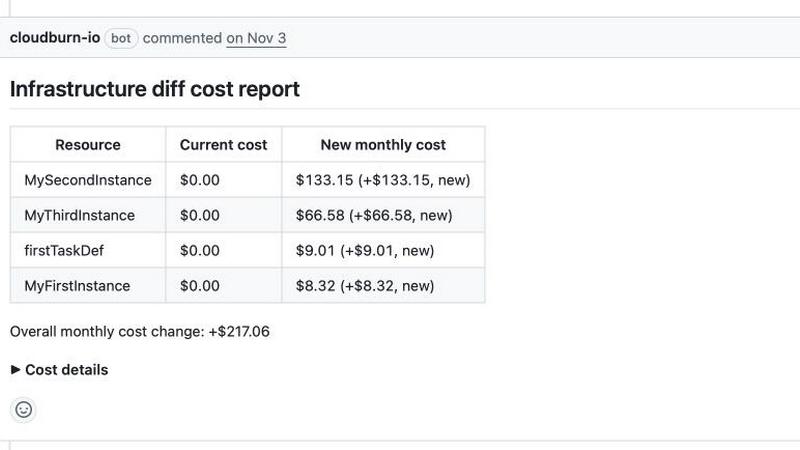
CloudBurn provides precise dollar estimates for every infrastructure change made in pull requests. This feature empowers teams to visualize the financial implications before any changes are deployed, preventing unexpected costs from accumulating.
Automated Cost Analysis
With CloudBurn, teams benefit from automated financial operations (FinOps) that seamlessly integrate into their CI/CD workflows. This automation ensures that cost visibility is always present, allowing developers to focus on delivering quality code without the fear of hidden costs.
Real-Time Pricing Updates
CloudBurn ensures that teams are always working with the most up-to-date AWS pricing. By providing real-time pricing for every resource, developers can make informed decisions based on current costs, enhancing the accuracy of their estimates.
Seamless GitHub Integration
Integrating CloudBurn into existing workflows is a breeze. Teams can install CloudBurn via the GitHub Marketplace, add the necessary GitHub Action, and start receiving automated cost analyses on every pull request, streamlining their review process.
OpenMark AI
Plain Language Task Description
Describe the specific task you need an AI model to perform using simple, natural language—no coding required. Whether it's data extraction, content classification, translation, or building a RAG pipeline, you can define your exact success criteria. The platform then translates this into structured prompts to ensure every model in your benchmark is tested against the same, relevant challenge, fostering a shared understanding across technical and non-technical team members.
Multi-Model Benchmarking in One Session
Run your defined task against a wide selection of models from leading providers like OpenAI, Anthropic, and Google in a single, unified session. This eliminates the tedious process of manually configuring separate API keys and writing individual test scripts for each model. Your team gets immediate, side-by-side comparisons, streamlining the evaluation process and enabling faster, consensus-driven decision-making.
Comprehensive Performance Metrics
Move beyond marketing claims with metrics derived from real API calls. Compare not just token cost, but the actual cost per request, latency, and a scored assessment of output quality for your task. Most importantly, OpenMark runs multiple iterations to measure stability and variance, showing you how consistent a model's performance is. This holistic view ensures your team chooses a model that is both cost-effective and reliably high-quality.
Hosted Credits System
Simplify collaboration and budgeting with a unified credits system. Team members can run benchmarks without needing to provision or share sensitive individual API keys from different vendors. This centralized approach makes it easy to manage testing costs, track usage across projects, and ensure everyone is working from the same financial and operational framework, enhancing team synergy.
Use Cases
CloudBurn
Preventing Cost Overruns
CloudBurn is ideal for development teams that frequently modify infrastructure. By providing cost estimates during the code review process, teams can avoid unexpected budget overruns and make necessary adjustments before deployment.
Enhancing Team Collaboration
With detailed cost reports integrated into pull requests, CloudBurn fosters a collaborative environment where developers can discuss financial implications openly. This transparency helps align technical decisions with budgetary constraints.
Streamlining CI/CD Workflows
For organizations using CI/CD practices, CloudBurn automates cost analysis, saving time and resources. Teams can focus on coding and deploying features without the worry of manually estimating costs, thus enhancing overall efficiency.
Educating Teams on Cost Awareness
CloudBurn serves as an educational tool for development teams, instilling a culture of cost awareness. By making cost implications visible, it encourages developers to consider financial impacts in their design and implementation choices.
OpenMark AI
Validating Model Choice Before Development
Development teams can collaboratively test multiple LLMs on a prototype task before committing engineering resources. This ensures the selected model fits the technical requirements and budget constraints, preventing costly rework later and aligning the entire team on a proven, data-backed foundation for the upcoming build phase.
Optimizing Cost-Efficiency for Production Features
Product and engineering leads can work together to find the most cost-effective model for a live feature without sacrificing quality. By benchmarking on real user prompts, teams can identify if a smaller, less expensive model performs just as well as a premium one for their specific use case, directly improving the feature's ROI through cooperative analysis.
Ensuring Output Consistency and Reliability
Teams building features where consistent outputs are critical—such as data extraction pipelines or automated customer support—can use OpenMark to stress-test models. By analyzing variance across multiple runs, the team can collaboratively identify and select a model that delivers stable, predictable results, building trust in the AI component's performance.
Comparing New Model Releases
When a new model version is released, teams can quickly benchmark it against their currently used model on their exact tasks. This facilitates a streamlined, evidence-based upgrade discussion, allowing the team to collaboratively assess if the new model offers meaningful improvements in quality, speed, or cost for their application.
Overview
About CloudBurn
CloudBurn is a cutting-edge tool tailored for teams leveraging Terraform or the AWS Cloud Development Kit (CDK) to manage cloud infrastructure. It aims to eliminate costly infrastructure errors before they reach production, a critical concern in today's fast-paced cloud environment. Often, teams are surprised by unexpected AWS costs that surface weeks after deployment, leading to budget overruns and financial strain. CloudBurn mitigates this risk by integrating cost visibility directly into the code review process, allowing teams to evaluate the financial impact of their infrastructure changes in real-time. This proactive approach enables developers to engage in collaborative discussions about budget implications, ultimately leading to informed decision-making. By providing detailed cost reports during pull request reviews, CloudBurn not only enhances team collaboration but also ensures that infrastructure remains cost-effective and efficient, saving valuable time and resources.
About OpenMark AI
OpenMark AI is a collaborative web platform designed to empower development and product teams to make data-driven decisions when integrating AI. It eliminates the guesswork from selecting the right large language model (LLM) for a specific feature or workflow. The core value proposition is enabling teams to benchmark models side-by-side on their exact tasks using plain language, without the need for complex setup or managing multiple API keys. By running the same prompts against a vast catalog of over 100 models in a single session, teams can compare critical real-world metrics like cost per request, latency, scored output quality, and—crucially—output stability across repeat runs. This focus on consistency reveals performance variance, ensuring you select a reliable model, not just one that got lucky once. OpenMark AI is built for pre-deployment validation, helping teams collaboratively find the optimal balance of cost-efficiency and quality for their unique application before any code is shipped.
Frequently Asked Questions
CloudBurn FAQ
How does CloudBurn integrate with GitHub?
CloudBurn integrates seamlessly with GitHub by allowing users to install it via the GitHub Marketplace. After installation, teams can add the relevant GitHub Actions to their workflows to automate cost analysis on every pull request.
What programming languages does CloudBurn support?
CloudBurn primarily supports infrastructure-as-code tools such as Terraform and the AWS Cloud Development Kit (CDK). This flexibility allows teams using these platforms to leverage CloudBurn's cost analysis features.
How quickly can I see cost estimates after a pull request?
CloudBurn analyzes the changes in a pull request and posts a detailed cost report within seconds. This immediate feedback allows teams to make informed decisions without delay.
Is there a free trial available for CloudBurn?
Yes, CloudBurn offers a 14-day Pro trial, allowing users to explore all Pro features at no cost. Users can cancel anytime or choose to continue with the Community plan indefinitely.
OpenMark AI FAQ
How does OpenMark AI calculate the quality score?
The quality score is determined by evaluating the model's outputs against the specific task you defined. While the exact scoring methodology is tailored to the task type, it generally involves automated checks for accuracy, completeness, and adherence to your instructions. This objective scoring helps teams move beyond subjective opinions to a shared, quantitative understanding of model performance.
Do I need my own API keys to use OpenMark AI?
No, you do not need to configure or manage separate API keys from providers like OpenAI or Anthropic. OpenMark operates on a hosted credits system. You purchase credits through the platform and use them to run benchmarks, which are executed via OpenMark's own integrations. This simplifies setup and secures your team's workflow.
What is the benefit of testing for stability/variance?
Testing stability by running the same prompt multiple times shows you whether a model's good output was a lucky one-off or a reliable result. High variance means the model is inconsistent, which is a major risk for production features. This insight allows your team to choose a predictably good performer, ensuring a better user experience and reducing operational headaches.
Can I use OpenMark for tasks beyond simple text generation?
Absolutely. OpenMark is designed for a wide variety of task-level benchmarking, including complex workflows like classification, translation, data extraction, question answering, RAG (Retrieval-Augmented Generation) systems, and even image analysis with multimodal models. Describe your collaborative project's needs, and you can benchmark models suited for that specific challenge.
Alternatives
CloudBurn Alternatives
CloudBurn is an innovative tool tailored for teams leveraging Terraform or AWS Cloud Development Kit (CDK). It falls into the category of cloud cost management solutions, specifically designed to help prevent costly infrastructure mistakes before they impact production. Users often seek alternatives to CloudBurn due to various reasons, such as pricing concerns, the need for additional features, or compatibility with specific platforms. When exploring alternatives, it’s essential to consider factors such as the accuracy of cost estimates, integration capabilities with existing workflows, and the level of detail provided in cost reports. A solution that enhances collaboration and offers real-time insights into infrastructure costs can significantly contribute to more informed decision-making within development teams.
OpenMark AI Alternatives
OpenMark AI is a developer tool for task-level benchmarking of large language models. It helps teams compare cost, speed, quality, and stability across 100+ LLMs in a single browser-based session, using real API calls to inform pre-deployment decisions. Teams often explore alternatives for various reasons, such as different budget constraints, a need for on-premise deployment, or requirements for more specialized testing features like automated regression or deeper performance analytics. The ideal tool varies based on a project's specific phase and technical needs. When evaluating other solutions, consider the scope of model coverage, the transparency of cost calculations, the depth of quality assessment metrics, and whether the platform provides genuine, uncached performance data. The goal is to find a benchmarking partner that offers clear, actionable insights tailored to your team's workflow and collaboration style.