CloneUI vs FLUX.2 [max] Image Generator
Side-by-side comparison to help you choose the right product.

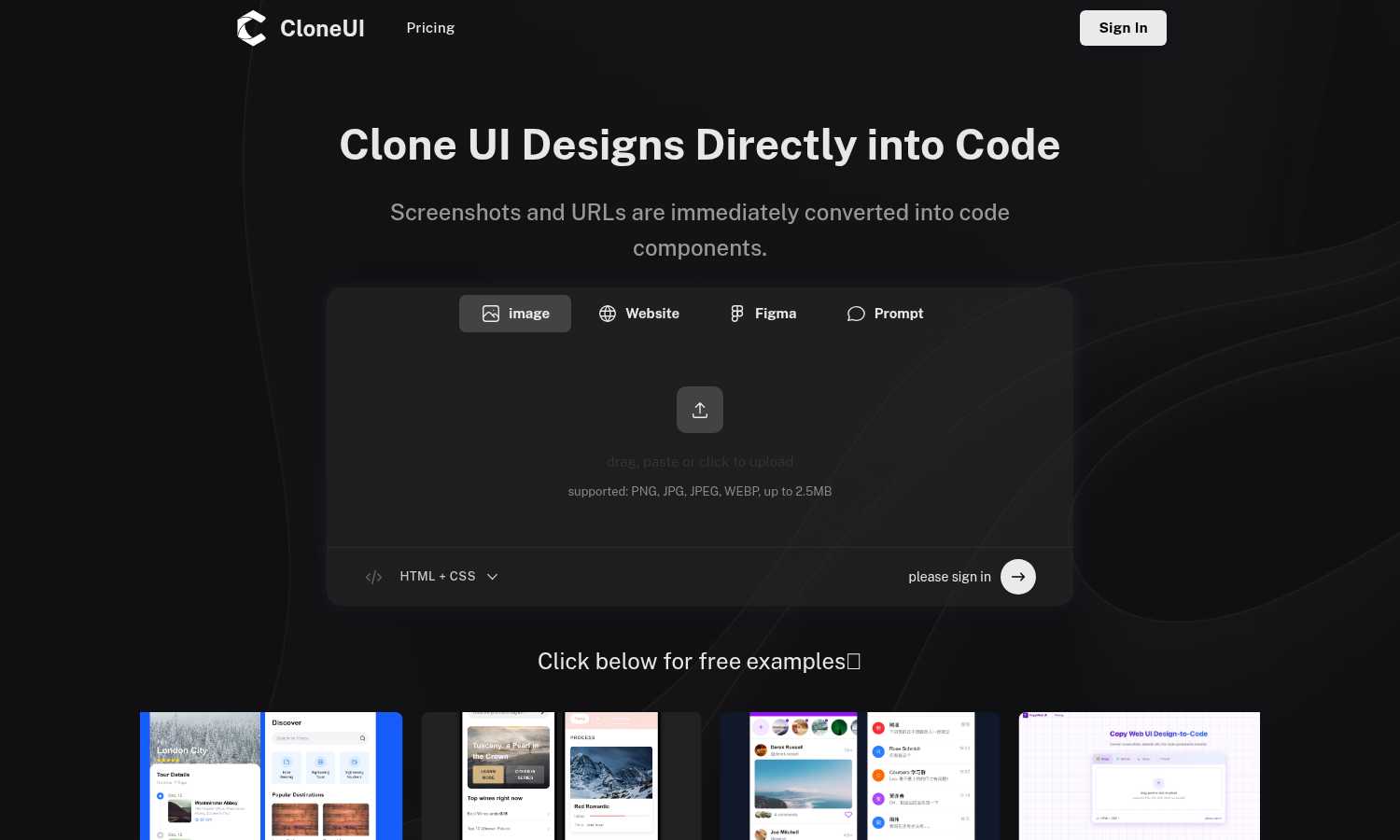
CloneUI enables your team to effortlessly transform designs into clean, responsive code from screenshots or URLs.
Last updated: March 1, 2026
![FLUX.2 [max] Image Generator logo](https://unitelist.com/images/flux2max-app-icon.jpg)
FLUX.2 [max] Image Generator
FLUX.2 [max] is your collaborative AI image generator, delivering production-ready visuals with prompt galleries and seamless editing workflows.
Last updated: March 26, 2026
Visual Comparison
CloneUI
FLUX.2 [max] Image Generator
![FLUX.2 [max] Image Generator screenshot](https://unitelist.com/images/flux2max-app-screenshot.jpg)
Feature Comparison
CloneUI
Convert Screenshots to Code
With CloneUI, uploading a design screenshot generates pixel-perfect code in seconds. This feature eliminates the guesswork involved in coding, ensuring that every pixel aligns with your original vision.
Clone from URL
This innovative functionality allows users to effortlessly replicate entire website structures by simply entering a URL. You can capture the essence of existing designs and use them as a foundation for your projects.
Figma to Code Conversion
One-click conversion from Figma to code simplifies the design-to-development handoff. Designers can easily translate their Figma designs into functional code, minimizing the back-and-forth communication often required.
Intelligent Component Recognition
CloneUI features AI-powered automatic UI component identification and mapping, ensuring that each element is recognized and translated accurately into code components. This enhances collaboration, as both designers and developers can trust the output.
FLUX.2 [max] Image Generator
Searchable Prompt Gallery & Category Hubs
This feature provides a vast, organized library of successful image prompts across categories like PORTRAIT, PRODUCT, CONCEPT, and SCENERY. It acts as a collaborative reference hub, allowing teams to find inspiration, understand effective prompt patterns, and jumpstart projects with proven starting points. This shared resource ensures everyone is aligned on style and quality, turning visual research into actionable creative briefs instantly.
Iterative Editing & Advanced Workflows
FLUX.2 [max] excels in non-destructive, iterative editing, allowing creators to refine lighting, adjust composition, or clean up details while maintaining image stability. This is complemented by specialized workflows for spatial reasoning (controlling perspective and camera angles), precise retexturing of objects, and exceptional text rendering in any style. This suite of tools enables a team to polish an image to professional standards through a cooperative, step-by-step refinement process.
Multi-Model Generator with Flexible Controls
The live generator supports a wide array of AI models, including FLUX.2 [max], Gemini 2.5 Flash, and others, giving teams the flexibility to choose the best tool for a specific task. Coupled with customizable canvas sizes (Square, Wide, Portrait, etc.), this feature allows for the creation of assets tailored to any platform or format, from social media graphics to cinematic wide shots, fostering adaptability in collaborative projects.
Character Consistency Engine
A standout feature for narrative and branding work, this engine allows teams to create and edit characters with unmatched consistency across different images, scenes, and styles. It preserves facial features, proportions, and visual identity, making it possible to develop a character sheet or maintain a brand mascot's look throughout an entire campaign, ensuring cohesive storytelling and brand recognition.
Use Cases
CloneUI
Rapid Prototyping
CloneUI is perfect for teams looking to rapidly prototype their ideas. By converting designs into code quickly, teams can iterate on functionality and user experience without the usual delays in the development process.
Freelance Development
Freelancers can significantly enhance their workflow by utilizing CloneUI. They can deliver high-quality work faster, allowing them to take on more clients and projects while maintaining the quality of their output.
Agency Projects
Agencies handling multiple projects can benefit from CloneUI's ability to streamline the design process. By generating code from designs, teams can focus on creative strategies rather than spending time on repetitive coding tasks.
Educational Purposes
For educators and students in design and development, CloneUI serves as a valuable learning tool. It provides insights into how designs are translated into code, making it easier to understand the intricacies of web development.
FLUX.2 [max] Image Generator
Product Marketing & Photography
Teams can generate highest-quality, marketplace-ready product photos that look polished and professional. By using reference photos and iterative editing, they can create consistent, stylized shots for e-commerce, advertisements, and packaging, significantly speeding up the asset production cycle while maintaining a high bar for visual quality.
Concept Art & Filmmaking
Ideal for pre-production, this use case involves creating cinematic texture and richly stylized frames for storyboards, environment concepts, and character design. The spatial reasoning and dramatic lighting capabilities help directors and concept artists visualize complex scenes and establish a unified visual language early in the collaborative filmmaking process.
Branding & Logo Design
Teams can take an existing logo as a reference and generate stunning, brand-consistent design variations. This is perfect for exploring thematic styles, creating branded content, or developing visual identities across different media, allowing for creative experimentation that stays true to the core brand elements.
Commercial & Lifestyle Imagery
From cinematic food shots and fashion editorials to workspace moods and lifestyle scenes, FLUX.2 [max] enables the rapid creation of on-brand commercial imagery. The prompt gallery provides immediate direction for style and composition, helping marketing and content teams produce engaging visual content for campaigns, websites, and social media efficiently.
Overview
About CloneUI
CloneUI is a groundbreaking AI-powered tool that transforms the way design and development teams collaborate, enabling a seamless workflow from concept to execution. It is tailored for designers and developers looking to enhance their productivity by eliminating the tedious process of converting visual designs into code. With CloneUI, users can instantly convert static screenshots, live website URLs, or Figma design files into clean, production-ready code components. The intelligent algorithms at the core of CloneUI analyze inputs, ensuring that generated code is precise and responsive across various devices. This tool not only accelerates the development process but also allows teams to focus on more complex tasks, fostering a cooperative environment that encourages innovation. By turning design inspirations into tangible code, CloneUI becomes an essential asset for agile teams, freelance developers, and agencies aiming to deliver high-quality projects at an accelerated pace.
About FLUX.2 [max] Image Generator
FLUX.2 [max] Image Generator is a comprehensive AI-powered creative suite designed to transform visual research into production-ready imagery. It moves beyond simple text-to-image generation by integrating a searchable prompt gallery, specialized category hubs, and a live generator into a single, cohesive workflow. This synergy is built for professional creators, marketers, and designers who demand not just high-quality outputs but also efficiency and precision in their process. The platform's core value proposition lies in its ability to provide clear creative direction through real-world examples and then offer the advanced tools needed to execute and refine those ideas. With support for multiple AI models, including its flagship FLUX.2 [max], and a focus on professional workflows like iterative editing, character consistency, and advanced text rendering, it serves as an indispensable partner for teams working on product photography, concept art, branding, and cinematic production. It’s about reducing guesswork and wasted iterations, enabling a collaborative flow from inspiration to final asset.
Frequently Asked Questions
CloneUI FAQ
Which input formats are compatible with CloneUI?
CloneUI supports various input formats, including PNG, JPG, JPEG, and WEBP images, allowing users to upload design screenshots with ease.
How is the code generated?
The code is generated through advanced AI algorithms that analyze the uploaded designs or URLs, ensuring that the output is clean, responsive, and ready for production.
Supported frameworks?
CloneUI offers flexibility by allowing users to export generated code to their preferred frameworks, including React, Vue, or plain HTML/CSS.
Is the generated code customizable?
Yes, the generated code can be customized to fit specific project needs, allowing developers to tweak the output while maintaining the integrity of the original design.
FLUX.2 [max] Image Generator FAQ
What makes FLUX.2 [max] different from other AI image generators?
FLUX.2 [max] distinguishes itself by being a complete workflow platform, not just a generator. It combines a searchable prompt gallery and category hubs for inspiration with advanced, production-ready editing tools like iterative refinement, character consistency, and spatial reasoning. This integrated approach is designed to reduce wasted iterations and provide clear paths from research to final, polished assets.
How does the Character Consistency feature work?
The Character Consistency engine uses advanced AI to lock in the visual identity of a character—including facial features, proportions, and style—across multiple generated images. You start with a reference image of your character, and the model will maintain those core attributes even when changing the scene, outfit, or action, which is essential for storytelling and branding projects.
Can I use FLUX.2 [max] for creating images with text?
Yes, advanced text rendering is a key strength. FLUX.2 [max] excels at integrating text into images, adapting seamlessly to various styles like modern typography, classic lettering, handwritten scripts, or dynamic 3D effects. This makes it highly effective for creating posters, branded graphics, logos, and any imagery where legible, stylized text is required.
What is the best way to start using the platform for a new project?
The platform is designed for a prompt-first workflow. The most effective path is to begin in the Prompt Gallery or relevant Category Hub (e.g., PRODUCT, CONCEPT) to find inspiration and see examples of successful prompts. This research-led approach provides a strong creative direction, which you can then bring to life and refine using the live Generator and its iterative editing tools.
Alternatives
CloneUI Alternatives
CloneUI is a groundbreaking AI-powered tool that sits at the intersection of design and development, enabling teams to transform visual designs into clean, production-ready code efficiently. As organizations strive for greater collaboration between designers and developers, users often seek alternatives to CloneUI due to factors like pricing, specific feature requirements, or compatibility with existing workflows. When selecting an alternative, it's essential to consider the range of design input formats supported, the intelligence of its component recognition capabilities, and how well it integrates with your team's current processes to ensure a seamless transition and continued productivity.
FLUX.2 [max] Image Generator Alternatives
FLUX.2 [max] Image Generator is a powerful AI tool in the design and image generation category. It goes beyond simple creation by offering a collaborative hub with a prompt gallery and professional editing workflows, helping teams turn visual research into final assets. Teams often explore alternatives for various reasons. This could be due to budget considerations, the need for different feature sets, or specific platform integrations that better suit their existing collaborative environment. Finding the right tool fit is crucial for seamless project synergy. When evaluating other options, consider how well they support team-based creation. Look for tools that facilitate shared inspiration, maintain consistency across assets, and offer production-ready editing capabilities. The goal is to find a platform that enhances your team's collective workflow, not just individual output.