Claude Fast vs Tickari
Side-by-side comparison to help you choose the right product.

Claude Fast
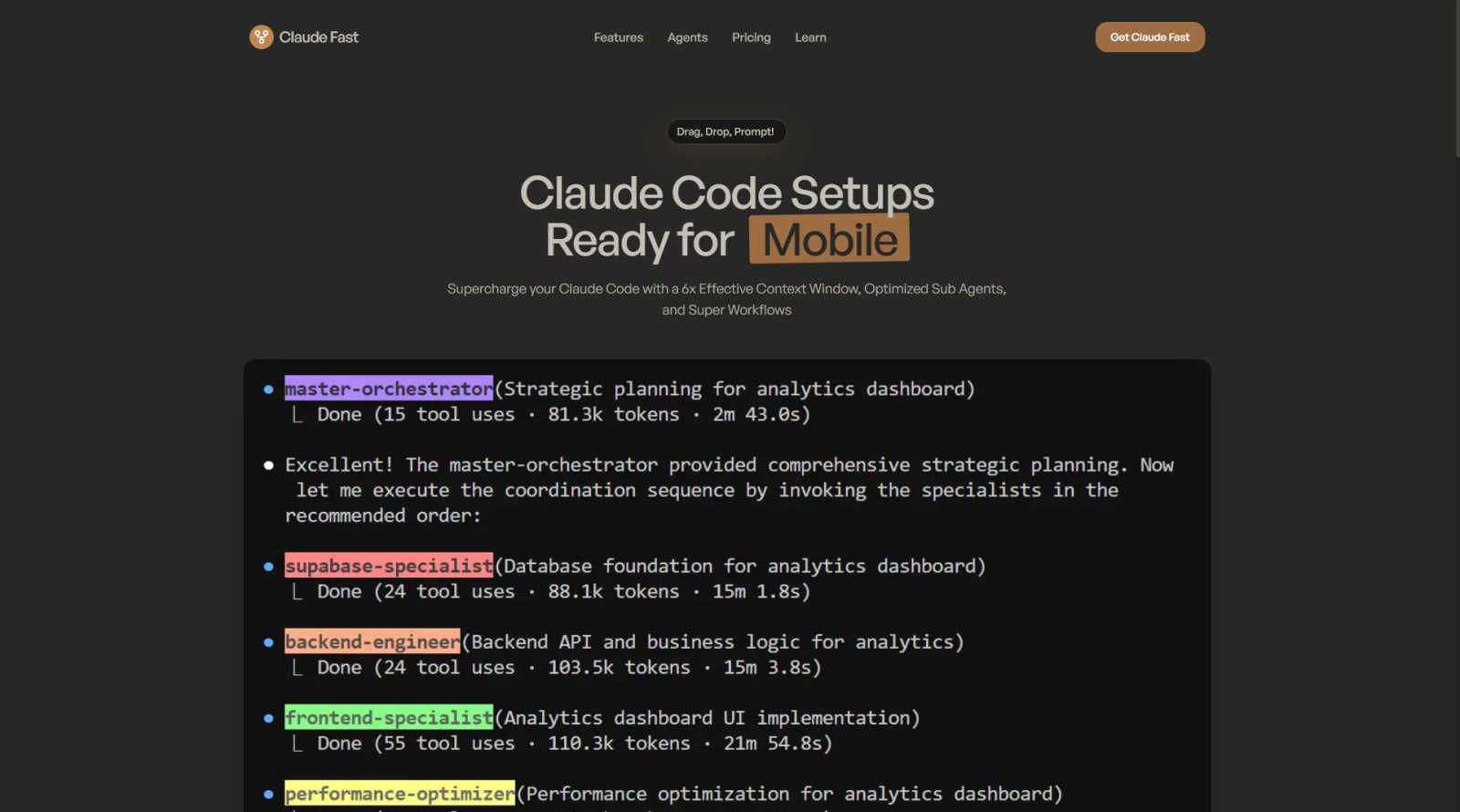
Claude Fast supercharges Claude Code with intelligent agents and seamless teamwork for developers.
Last updated: March 1, 2026

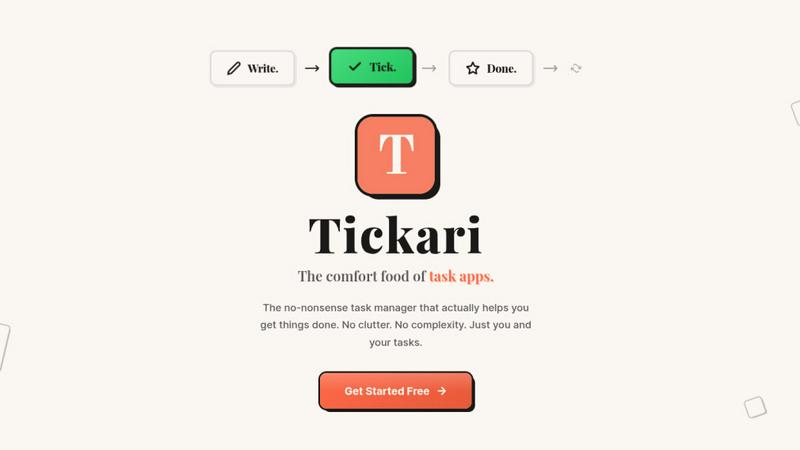
The no-nonsense task manager that actually helps you get things done. No clutter. No complexity. Just you and your tasks.
Visual Comparison
Claude Fast
Tickari
Overview
About Claude Fast
Claude Fast is a revolutionary AI development framework that transforms the solo experience of Claude Code into a collaborative, high-performance team environment. It is designed for developers, founders, and product teams who want to move from idea to execution with unprecedented speed and cohesion. At its core, Claude Fast orchestrates 11 specialized AI agents, each an expert in areas like frontend, backend, DevOps, or marketing, to work in synergy on your projects. This intelligent orchestration eliminates the common frustrations of working with AI, such as forgotten context, inconsistent outputs, and manual task management. The framework's genius lies in its seamless integration of agent collaboration, context optimization, and native workflow tools, allowing your AI team to maintain session continuity, track progress, and execute complex, multi-step tasks with a shared understanding. By providing a structured, constantly evolving system built on Anthropic's best practices, Claude Fast empowers you to stop wrestling with prompts and start shipping quality code and products, effectively giving you a 10x multiplier on your development and growth capabilities.
About Tickari
Tickari is a deliberately minimal, no-nonsense task manager designed for people who are tired of overcomplicated productivity tools and just want to get things done. Instead of overwhelming you with features like complex boards, AI-generated suggestions, or endless customization, Tickari focuses on a simple, frictionless workflow: write a task, tick it off, and move on.
The product embraces a “less but better” philosophy—eliminating clutter, reducing cognitive overhead, and removing the need for onboarding tutorials or setup processes. There are no distractions, no unnecessary decisions, and no feature bloat—just a clean interface that works instantly the moment you open it. This makes it particularly effective for users who feel stuck organizing tasks instead of actually completing them.