Sidehunt vs Tickari
Side-by-side comparison to help you choose the right product.

Sidehunt
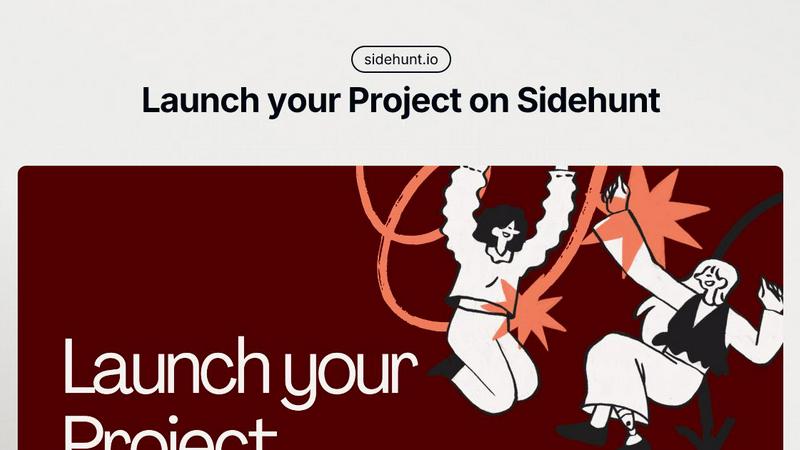
Sidehunt is the weekly hunt for side projects and indie products - submit, get votes, and reach people who try new launches first.

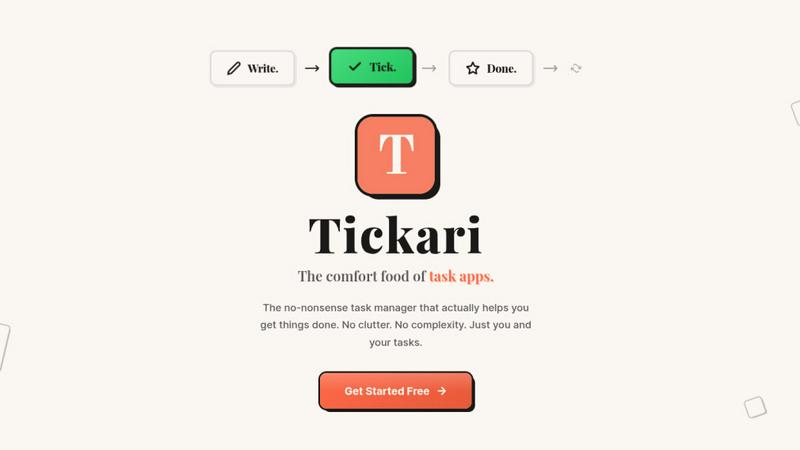
The no-nonsense task manager that actually helps you get things done. No clutter. No complexity. Just you and your tasks.
Visual Comparison
Sidehunt
Tickari
Overview
About Sidehunt
Sidehunt is a weekly launch platform focused on side projects and indie products—submit your product, collect real votes, and reach early adopters who actively explore new launches.
Key Features
Discover: Get featured in weekly launches and boost visibility.
This Week’s Hunt: Premium spotlight to highlight standout projects.
Weekly Hunts: One focused competition with genuine user feedback.
Past Hunts: Explore previous weekly and monthly launches.
Top Categories: Browse trending side project categories easily.
Use Cases
Individuals & Small Teams: Launch faster with a clear, simple structure and less guesswork.
Professionals & Larger Teams: Use as a reliable platform to validate ideas and scale launches.
Benefits
Clear Outcomes: Structured format simplifies the launch process.
Time Savings: Focus on building while Sidehunt handles discovery.
Better Decisions: Real feedback supports smarter product choices.
Ease of Use: Intuitive interface for all skill levels.
Pricing
$19 per launch: Simple, transparent pricing with no subscriptions.
Conclusion
Sidehunt provides a streamlined way to launch and discover side projects weekly, helping makers gain traction, validate ideas, and grow with real user feedback.
About Tickari
Tickari is a deliberately minimal, no-nonsense task manager designed for people who are tired of overcomplicated productivity tools and just want to get things done. Instead of overwhelming you with features like complex boards, AI-generated suggestions, or endless customization, Tickari focuses on a simple, frictionless workflow: write a task, tick it off, and move on.
The product embraces a “less but better” philosophy—eliminating clutter, reducing cognitive overhead, and removing the need for onboarding tutorials or setup processes. There are no distractions, no unnecessary decisions, and no feature bloat—just a clean interface that works instantly the moment you open it. This makes it particularly effective for users who feel stuck organizing tasks instead of actually completing them.