Playwriter vs qtrl.ai
Side-by-side comparison to help you choose the right product.

Playwriter
Playwriter empowers your team to control Chrome seamlessly with AI, leveraging your existing sessions for enhanced collaboration and efficiency.
Last updated: March 18, 2026

qtrl.ai
qtrl.ai helps QA teams scale testing with AI agents while maintaining full control and governance.
Last updated: March 4, 2026
Visual Comparison
Playwriter

qtrl.ai
Feature Comparison
Playwriter
Real Browser Session Access
Playwriter allows AI agents to access your existing Chrome session, including all extensions, logins, and cookies. This eliminates the issues of bot detection and memory overhead associated with headless browsers, making your automation efforts more effective and efficient.
Comprehensive Automation API
With Playwriter, you gain access to the full Playwright API through a single execute tool. This means that agents can run any Playwright code without the need for wrappers or multiple tool definitions, streamlining your automation workflow.
Collaboration in Real Time
The unique collaboration feature of Playwriter allows you to see everything the agent does in real time. When challenges arise, such as captchas or consent walls, you can intervene directly, ensuring seamless cooperation and effective problem-solving.
Debugging and Live Editing
Playwriter includes a powerful debugger with breakpoints and live code editing capabilities. This feature enables developers to test and adjust their automation scripts on the fly, optimizing performance and enhancing the overall user experience.
qtrl.ai
Enterprise-Grade Test Management
qtrl provides a centralized, collaborative hub for all your testing activities. Your team can work together to organize test cases, plan comprehensive test runs, and maintain full traceability from requirements to coverage. This structured foundation, built with compliance and auditability in mind, gives everyone clear visibility into quality status, helping you manage risk as a unified group.
Progressive AI Automation
This feature allows your team to adopt automation at your own pace, working in synergy with AI. Start by writing high-level test instructions for the AI to execute. As trust builds, leverage qtrl to generate full test scripts from plain English, which your team can review and approve. The platform even suggests new tests based on coverage gaps, making automation a collaborative, step-by-step journey.
Autonomous QA Agents
qtrl's intelligent agents act as an extension of your team, executing test instructions on demand or continuously across multiple browsers and real environments. They operate within the rules and permissions your team sets, providing scalable execution power without hidden "black-box" decisions. This allows human testers to focus on complex scenarios while agents handle repetitive tasks.
Adaptive Memory & Multi-Environment Execution
The platform builds a living, shared knowledge base of your application by learning from every exploration, test run, and issue. This collective intelligence powers smarter, context-aware test generation that improves over time. Coupled with the ability to run tests seamlessly across development, staging, and production environments with secure secrets management, your team ensures consistent quality at every stage.
Use Cases
Playwriter
Web Testing
Playwriter is ideal for web developers and testers who need to automate the testing of web applications. By leveraging the full browser session, they can ensure that tests are run in a realistic environment, leading to more accurate results.
Data Scraping
Data analysts can utilize Playwriter to automate data collection from websites. With access to real browser sessions, they can navigate websites that require logins and avoid common scraping pitfalls like bot detection.
User Experience Research
Researchers can use Playwriter to simulate user interactions on their websites. By collaborating in real time with AI agents, they can gather insights into user behavior and identify areas for improvement.
Content Management
Content managers can automate repetitive tasks, such as posting updates or managing content on various platforms. With Playwriter, they can ensure that automation is done in an authenticated session, preserving the integrity of content management processes.
qtrl.ai
Scaling Beyond Manual Testing
For QA teams overwhelmed by repetitive manual checks, qtrl offers a cooperative path forward. Teams can begin by structuring their existing manual cases in the platform, then gradually introduce AI agents to automate the most time-consuming scripts. This collaborative approach allows testers to upskill and focus on high-value exploratory testing while confidently scaling coverage.
Modernizing Legacy QA Workflows
Companies stuck with outdated, siloed, or script-heavy automation frameworks can use qtrl to modernize cohesively. The platform integrates with existing tools and CI/CD pipelines, allowing teams to incrementally replace brittle scripts with AI-maintained tests. This fosters a smoother transition, bringing development and QA together on a single, transparent platform.
Governing Enterprise AI Testing
Enterprises requiring strict compliance, audit trails, and governance can safely leverage AI with qtrl. The platform's permissioned autonomy levels, full agent visibility, and enterprise-ready security ensure that AI automation enhances control rather than undermining it. Teams can demonstrate clear traceability from requirement to test execution for every release.
Empowering Product-Led Engineering Teams
Product-led engineering teams that prize velocity and ownership can embed quality into their workflow with qtrl. Developers and product managers can write simple English instructions for features, and qtrl's agents can generate and run the corresponding tests, creating a synergistic feedback loop that catches issues early without creating a testing bottleneck.
Overview
About Playwriter
Playwriter is a groundbreaking tool that empowers AI agents to operate within your actual browser environment. Unlike traditional solutions that rely on fresh browser instances or limited toolsets, Playwriter connects directly to your existing Chrome session, complete with your logins, cookies, and extensions. This innovative Chrome extension and CLI allow agents to execute Playwright scripts seamlessly, enabling real-time collaboration between human users and AI. It is particularly valuable for developers, testers, and anyone who requires automated web interactions without the hassle of bot detection or session restrictions. By providing a robust API and eliminating unnecessary memory overhead, Playwriter enhances productivity and fosters synergy between human oversight and automated processes.
About qtrl.ai
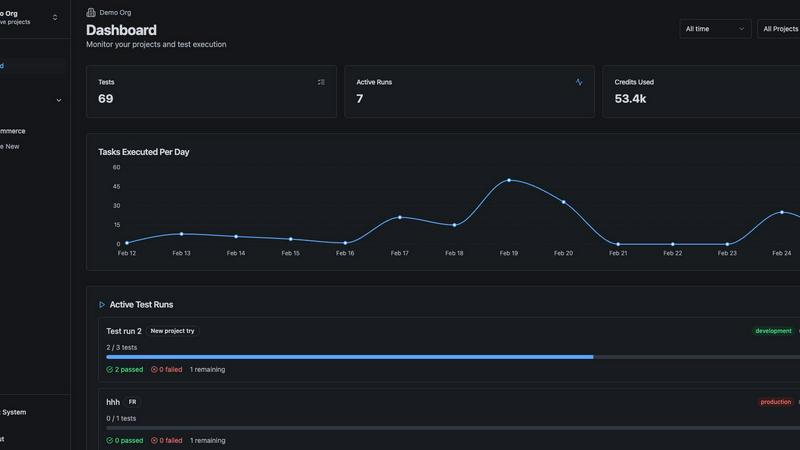
qtrl.ai is a modern, collaborative QA platform designed to help software teams scale their quality assurance efforts together, without ever sacrificing control or governance. It uniquely bridges the gap between structured test management and powerful, trustworthy AI automation, creating a synergistic hub for your entire quality process. At its core, qtrl provides a centralized workspace where teams can collaboratively organize test cases, plan test runs, trace requirements to coverage, and track quality metrics through shared, real-time dashboards. This foundation ensures clear, unified visibility into what's been tested and where potential risks lie, fostering better alignment between engineering leads, QA managers, and developers.
Where qtrl truly empowers teams is through its progressive AI layer. Instead of imposing a risky, fully autonomous "black-box" approach, qtrl introduces intelligent automation gradually and cooperatively. Teams can start with simple manual test management and, when ready, leverage built-in autonomous agents as trusted partners. These agents work alongside your team, generating UI tests from plain English descriptions, maintaining them as the application evolves, and executing them at scale. This makes qtrl the perfect collaborative partner for product-led engineering teams, QA groups moving beyond manual testing, companies modernizing legacy workflows, and enterprises that require strict compliance and audit trails. Ultimately, qtrl's mission is to help your team bridge the gap between the slow pace of manual testing and the brittle complexity of traditional automation, offering a trusted, cooperative path to faster, more intelligent quality assurance.
Frequently Asked Questions
Playwriter FAQ
How does Playwriter enhance browser automation?
Playwriter enhances browser automation by allowing agents to operate within your actual Chrome session. This includes access to all your logged-in accounts and extensions, which reduces bot detection and improves automation reliability.
Is Playwriter suitable for team collaboration?
Yes, Playwriter is designed for real-time collaboration. You can see what the agent is doing as it works, allowing you to intervene when necessary, such as solving captchas or addressing any issues that arise during automation.
What platforms does Playwriter support?
Playwriter supports various MCP clients, including Cursor, Claude, VS Code, and more. This versatility allows users to integrate Playwriter into their existing workflows with ease.
Is Playwriter open source?
Yes, Playwriter is open source and is licensed under the MIT license. This allows developers to contribute to its development and customize it according to their needs.
qtrl.ai FAQ
How does qtrl.ai ensure we don't lose control with AI?
qtrl is built on a philosophy of "permissioned autonomy." Your team always sets the rules. You start with simple, human-written instructions that the AI executes exactly. As you progress, every AI-generated test is fully reviewable and requires approval before being added to your suite. You maintain full visibility into all agent activities and decide what automates and what scales.
Can qtrl.ai integrate with our existing development tools?
Yes, qtrl is designed for real-world, collaborative workflows. It offers built-in support for requirements management tools and seamless CI/CD pipeline integration. The platform is built to work alongside your existing stack, providing continuous quality feedback loops without forcing your team into a completely new ecosystem.
What makes qtrl's AI different from other "autonomous" testing tools?
Unlike black-box AI solutions that make unpredictable changes, qtrl's AI is progressive and transparent. It doesn't force an AI-first approach. Instead, it earns trust by working alongside your team, suggesting changes for review, and learning from your application's specific context. The focus is on cooperative augmentation, not full replacement.
Is qtrl.ai suitable for teams with strict security and compliance needs?
Absolutely. qtrl is built with enterprise-grade security and governance by design. Features like encrypted secrets management (where secrets are never exposed to the AI), full audit trails, permission controls, and data processing agreements make it suitable for regulated industries. Your team can leverage powerful automation while maintaining the necessary compliance posture.
Alternatives
Playwriter Alternatives
Playwriter is an innovative tool that allows users to control Chrome through AI via command line interface (CLI) or multi-channel protocol (MCP). It falls under the automation category, providing a seamless experience by granting AI agents access to the user's actual browser session, complete with existing logins and extensions. This capability sets Playwriter apart from other solutions that often struggle with web browsing due to restrictions in access or functionality. Users often seek alternatives to Playwriter for various reasons, including pricing considerations, specific feature requirements, or compatibility with different platforms. When evaluating alternatives, it is essential to look for features that enhance usability, such as automation capabilities, ease of integration, performance efficiency, and the level of support offered. Ensuring that the alternative aligns with team collaboration and project goals is crucial for achieving optimal results.
qtrl.ai Alternatives
qtrl.ai is a modern QA platform in the automation and dev tools category, designed to help teams scale their testing efforts. It uniquely combines structured test management with trustworthy AI agents, allowing teams to automate tests while maintaining full control and governance over the process. Teams often explore alternatives for various reasons, such as budget constraints, specific feature requirements, or the need to integrate with a different development ecosystem. It's a natural part of finding the right collaborative fit for your team's unique workflow and goals. When evaluating options, consider how a solution balances intelligent automation with team oversight. Look for a platform that fosters synergy between manual and automated testing, provides clear visibility into quality metrics, and can adapt as your testing maturity grows. The right tool should feel like a seamless extension of your team's effort.