Nani vs Project20x
Side-by-side comparison to help you choose the right product.

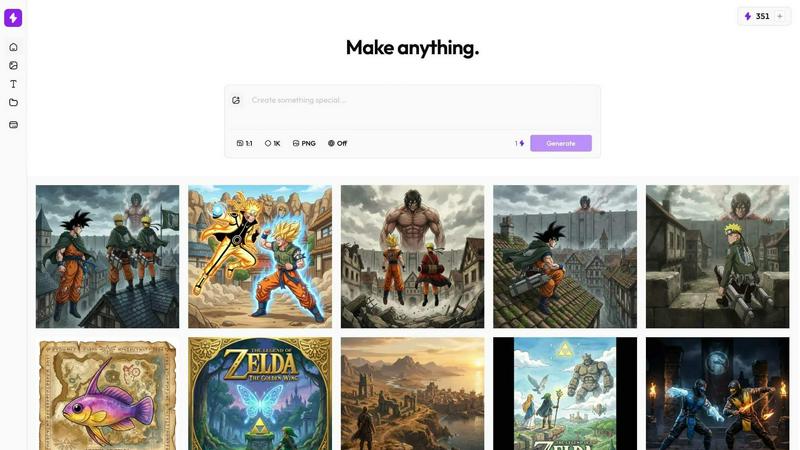
Nani organizes your team's AI image prompts and creations for a seamless, collaborative workflow.
Last updated: February 28, 2026

Project20x
Project20x is your AI governance partner, ensuring compliant and effective policies through seamless collaboration.
Last updated: March 4, 2026
Visual Comparison
Nani
Project20x
Feature Comparison
Nani
Nano Banana Pro Engine
At the heart of Nani is the powerful Nano Banana Pro (Gemini) AI, providing a robust foundation for your creative work. This cutting-edge technology enables you to generate stunning, high-resolution images in seconds with a simple prompt. The interface is designed for immediate productivity, offering customizable aspect ratios and resolutions without any visible watermarks, ensuring your final assets are ready for professional use from the very first generation.
Reusable Prompt Sets
This feature is the cornerstone of collaborative efficiency. Teams can save and name specific prompt combinations as reusable "Sets." This allows everyone—from illustrators to social media managers—to maintain perfect consistency in characters, art styles, color palettes, and project themes across countless generations. It eliminates prompt guesswork and miscommunication, creating a single source of truth for your project's visual language that the entire team can leverage.
Organized Creative Library
Nani provides powerful organizational tools that scale with your team's output. Create shared folders for different projects, clients, or campaigns. Filter your growing library to quickly find favorited images, and use bulk-select actions for efficient management. This keeps the team's collective work tidy, accessible, and manageable, turning a chaotic feed of images into a well-structured, collaborative asset library.
Seamless Collaborative Workflow
Nani is built for teamwork. You can drag and drop any image as a visual reference for new generations, bridging ideas visually. Share any creation instantly with a public link for feedback or presentation. Most powerfully, you can let teammates recreate and build upon your work within their own accounts, enabling a true iterative and synergistic creative process where ideas evolve collectively.
Project20x
The Governance Layer
This foundational layer fosters collaborative policy development. It employs a ten-step AI methodology that works alongside lawmakers, analyzing legislative drafts for clarity, consistency, and potential conflicts. By providing data-driven insights and highlighting areas for improvement, it empowers teams to craft sound, coherent policies from the start, setting a strong foundation for the entire digital governance ecosystem and ensuring all stakeholders are aligned.
The Management Layer (Rules as Code)
Here, approved policies are transformed into functional, executable code through a "Rules as Code" methodology. This collaborative process turns static legal text into dynamic, automated workflows and backend processes. It ensures that the intent of the policy is accurately and efficiently implemented across government systems, reducing manual errors and freeing up agency teams to focus on higher-value tasks that require human judgment and oversight.
The Citizen Interface Layer
This layer directly facilitates public engagement by providing citizens with 24/7 access to AI agents trained on the codified policies. These agents act as knowledgeable guides, helping users navigate services, understand eligibility for benefits, or complete applications. This creates a seamless, always-available point of contact that works in synergy with government staff, enhancing service delivery and public satisfaction.
Transparency & Audit Framework
Built on a commitment to accountability, every action and automated decision within Project20x is designed to be fully traceable and quantifiable. The platform maintains a secure, immutable record of processes, ensuring that all activities are subject to rigorous human oversight and audit. This collaborative framework of checks and balances builds essential public trust and provides teams with clear data for continuous improvement.
Use Cases
Nani
Consistent Brand Asset Creation
Marketing and design teams can use Nani to generate a large volume of on-brand imagery for campaigns, social media, and websites. By creating a "Set" with prompts defining the brand's color scheme, style, and mood, every team member can produce visuals that are cohesive and aligned, ensuring brand integrity across all generated assets without constant supervision or style guides.
Collaborative Storyboarding & Concept Art
Creative studios and game developers can streamline their pre-production phases. Artists can establish "Sets" for key characters, environments, and props. The team can then rapidly iterate on scenes, using the folder system to organize concepts by sequence or chapter, and drag-and-drop references to refine ideas together, accelerating the collaborative visioning process.
Efficient Content Production Pipelines
Content creators, bloggers, and agencies managing multiple clients can use Nani to maintain separate workflows for each project. By creating dedicated folders and prompt sets for each client or content theme, they can swiftly generate tailored illustrations and graphics, bulk-manage outputs, and maintain an organized library that makes asset retrieval and reporting simple and efficient.
Educational & Team Training Projects
Educators and trainers developing course materials or internal documentation can collaborate on creating custom imagery. A team can build a shared library of diagrams, historical recreations, or concept illustrations. The ability to share public links and recreate sets allows for easy distribution of visual resources and empowers others to generate complementary images for a unified learning experience.
Project20x
Streamlining Benefit Application & Eligibility
Agencies like the USDA or Department of Education can use Project20x to codify complex benefit program rules. Citizens can then interact with an AI agent to get instant, accurate guidance on eligibility and application steps, dramatically reducing wait times and confusion while allowing agency staff to manage complex exceptions and provide personalized support where it's most needed.
Legislative Drafting and Analysis
Lawmakers and their teams can leverage the Governance Layer as a collaborative drafting partner. The AI analyzes proposed bills for logical gaps, conflicts with existing statutes, and clarity of language. This synergistic review process helps produce more robust, implementable legislation from the outset, fostering better outcomes and smoother execution.
Automated Regulatory Compliance
For agencies such as the DOC managing business regulations, Project20x can automate compliance checks and reporting workflows. By turning regulations into code, businesses can interact with self-service portals to understand requirements, while agencies gain efficient tools for monitoring and enforcement, creating a more cooperative regulatory environment.
Public Information and Crisis Response
During events requiring rapid public communication, like a health advisory or disaster response led by agencies such as FEMA or USAID, the platform's AI agents can be instantly updated with new guidelines. They provide the public with consistent, accurate, and around-the-clock information, working in tandem with human communicators to manage volume and ensure reliable information dissemination.
Overview
About Nani
Nani is a collaborative workflow platform designed to transform AI image generation from a solitary, repetitive task into a streamlined, team-oriented creative process. Built for artists, designers, content creators, and creative teams, Nani addresses the core inefficiencies of standard AI art tools. It moves beyond one-off image creation to provide a structured environment where teams can build, iterate, and organize their visual projects together. Powered by Google's advanced Nano Banana Pro (Gemini) model, Nani delivers high-quality, watermark-free images. Its true value lies in fostering synergy: by allowing users to save reusable prompt sets, organize assets into shared folders, and seamlessly reference past work, Nani ensures that creative vision remains consistent and collaborative momentum is never lost. It’s the tool that lets your team focus on collective creativity, not administrative busywork, making it an indispensable hub for any project requiring regular, high-volume image generation.
About Project20x
Project20x is a collaborative, AI-native platform built to fundamentally transform how governments operate and engage with citizens. We believe that by working together, agencies, lawmakers, and the public can create a more efficient, transparent, and responsive government. Our platform acts as a synergistic bridge, translating complex legal and regulatory frameworks into clear, actionable digital processes that everyone can understand and use. Designed for government agencies, policymakers, and citizens alike, Project20x operates through three integrated layers: Governance, Management, and Interface. This structure ensures that from the initial drafting of a policy to its final implementation and public interaction, every step is connected, coherent, and built for teamwork. Our core value proposition lies in making governance quantifiable, traceable, and accessible, fostering an environment where human expertise and AI efficiency work in concert to build public trust and streamline operations for a better societal outcome.
Frequently Asked Questions
Nani FAQ
How do I start using Nani?
Getting started is simple and commitment-free. Just sign up for an account to instantly receive 5 free credits. There's no credit card required upfront. You can immediately explore the interface, generate your first images, and experience the collaborative features like creating Sets and folders to understand how Nani can streamline your team's workflow.
What is Nani's pricing model?
Nani uses a simple, transparent credit-based system. You only pay for the images you generate, with no monthly subscriptions or commitments. High-quality generations cost approximately 30 cents each. You purchase credits as needed, and they never expire. This flexible model ensures teams of any size can collaborate efficiently without being locked into a fixed fee, paying only for their actual production output.
Can I work with my team on the same projects?
Absolutely. Collaboration is central to Nani's design. While each user has their own account, you can easily share your work. You can send public links to any image for instant feedback and, most powerfully, others can use your shared prompt Sets to recreate and build upon your work within their own accounts, enabling a seamless back-and-forth creative process.
What makes Nani different from other AI image generators?
Unlike tools built for one-off creations, Nani is a comprehensive workflow platform designed for sustained, collaborative production. Its unique combination of reusable Prompt Sets, shared folder organization, and team-friendly features like reference dragging and public links addresses the real-world needs of teams who generate images regularly. It reduces repetitive tasks and misalignment, letting your team focus on synergy and creativity.
Project20x FAQ
How does Project20x ensure human oversight remains central to governance?
Project20x is designed as a collaborative tool, not a replacement for human judgment. The AI provides analysis, automation, and access, but all critical decisions, policy approvals, and complex case reviews are reserved for human officials. Our Transparency & Audit Framework ensures every automated process is traceable and subject to human review, maintaining a synergistic human-in-the-loop model.
What is "Rules as Code" and how does it work?
Rules as Code is a methodology where legal rules and policies are authored in a precise, machine-readable format alongside traditional legal text. In Project20x's Management Layer, this allows policies to be directly translated into software code. This creates a single source of truth, ensuring that the digital service citizens interact with is an accurate, real-time reflection of the law as passed, reducing misinterpretation.
Is citizen data secure on the Project20x platform?
Absolutely. Security and data privacy are foundational to our platform. We employ enterprise-grade security protocols, encryption, and compliance frameworks designed for government use. All data handling follows strict governance policies, and our transparent audit trails provide clear records of data access and usage, ensuring citizen information is protected through collaborative vigilance.
Can Project20x integrate with existing government IT systems?
Yes, a core part of our collaborative approach is building for interoperability. Project20x is designed with APIs and modular architecture to connect with legacy systems and modern platforms alike. Our team works in partnership with agency IT departments to ensure a smooth, synergistic integration that enhances current capabilities without requiring a complete system overhaul.
Alternatives
Nani Alternatives
Nani is a specialized AI workflow tool within the broader AI Assistants category, designed to organize prompts and images into reusable sets. It transforms the often chaotic process of AI image generation into a structured and repeatable creative system. Users may explore alternatives for various reasons, such as budget constraints, the need for different core AI models, or specific platform integrations. Some may seek tools with a different focus, like advanced in-painting or 3D generation, rather than Nani's strength in workflow management and consistency. When evaluating other options, consider your primary need: is it raw image quality, cost, collaboration features, or, like Nani, streamlining a repetitive creative process? The best fit aligns with your workflow requirements, team size, and how much you value organized prompt libraries versus one-off generation.
Project20x Alternatives
Project20x is a specialized AI governance platform designed to help government entities translate complex policies into clear, actionable digital workflows. It falls within the broader category of AI assistants and governance tools, focusing on public sector transformation. Organizations often explore alternatives for various reasons, such as specific budget constraints, the need for different feature sets, or integration requirements with existing legacy systems. The search for the right tool is a collaborative effort to find the best fit for a team's unique operational landscape and strategic goals. When evaluating options, it's wise to consider how a solution handles policy codification, ensures transparency and security, and facilitates citizen engagement. The ideal partner will offer a synergistic approach that aligns with your agency's commitment to modern, accountable, and effective public service.