Mechasm.ai vs Miget
Side-by-side comparison to help you choose the right product.

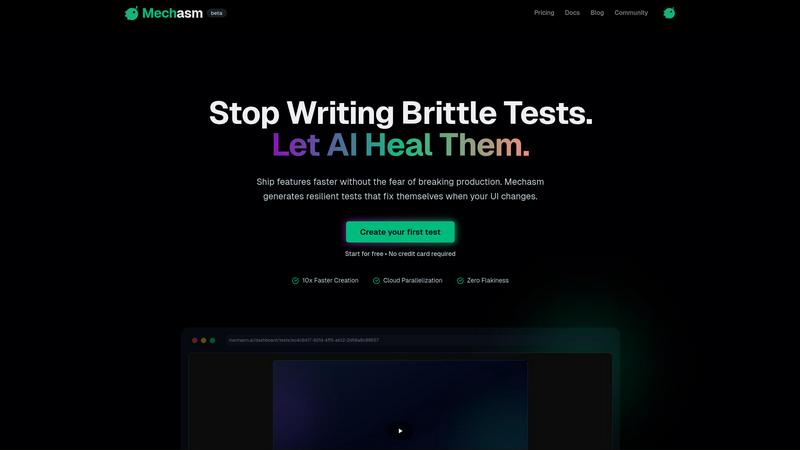
Mechasm.ai empowers teams to effortlessly create self-healing tests in plain English, ensuring reliable and faster.
Last updated: February 28, 2026

Miget
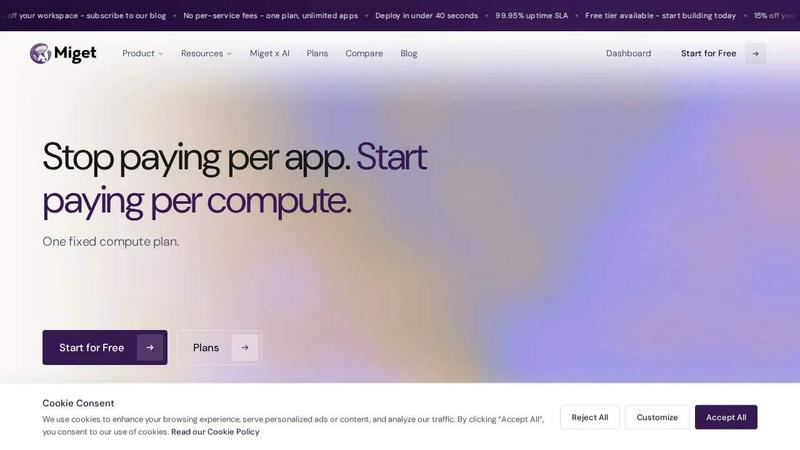
Deploy unlimited services on one flat-rate plan.
Visual Comparison
Mechasm.ai
Miget
Overview
About Mechasm.ai
Mechasm.ai is an innovative automated testing platform designed specifically for modern engineering teams that face the challenges of traditional quality assurance (QA) methods. As software development evolves, legacy testing frameworks often impede progress, making it essential for teams to adopt more agile solutions. Mechasm.ai introduces a groundbreaking approach known as Agentic QA, allowing users to write tests in plain English. This user-friendly accessibility empowers not just QA engineers but also developers, product managers, and designers to collaborate effectively in enhancing the quality assurance process. The platform's primary value proposition lies in its ability to generate resilient, self-healing tests that automatically adapt to UI changes without requiring manual intervention. By bridging the gap between human intent and technical execution, Mechasm.ai facilitates faster feature delivery and instills greater confidence in production deployments. This ultimately leads to enhanced team synergy and operational efficiency, ensuring that teams can ship high-quality code without the fear of breaking existing functionalities.
About Miget
Miget – Stop paying per app. Start paying per compute.
Traditional PaaS platforms charge you for every app, database, and worker separately. Miget flips that model: pick a fixed compute plan, then deploy as many services as you want inside it.
- Unlimited apps, databases, and background workers per plan
- No per-service billing surprises
- Built on Kubernetes with full isolation between tenants
- Deploy from Git, GitHub, Registry with zero-config builds
- Managed PostgreSQL, Redis, and more
- Custom domains with automatic TLS
Whether you're running a single side project or a full production stack, you only pay for the compute you reserve—not the number of things you run on it.