MemMachine vs UNI-1
Side-by-side comparison to help you choose the right product.

MemMachine
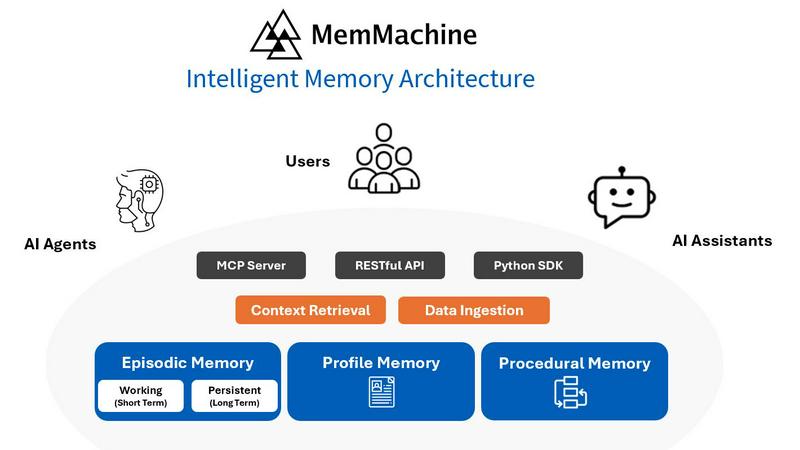
MemMachine is the open-source memory layer that helps your AI agents learn and grow together.
Last updated: February 28, 2026

UNI-1
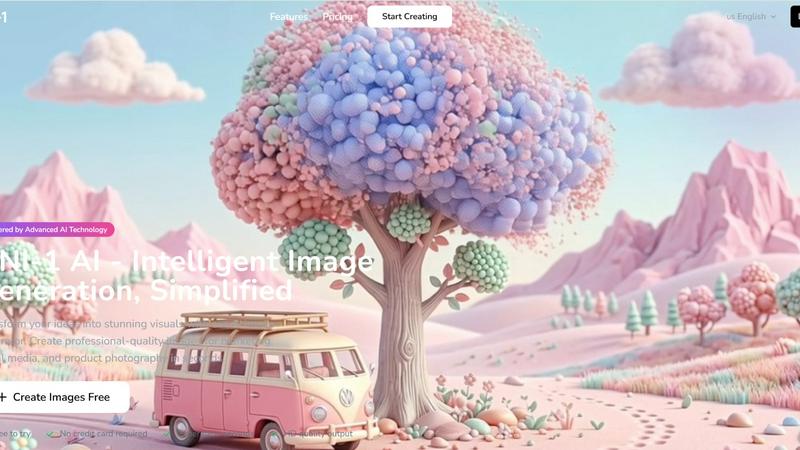
UNI-1 is an AI platform that effortlessly transforms your ideas into stunning, professional-quality images in seconds.
Last updated: April 4, 2026
Visual Comparison
MemMachine
UNI-1
Feature Comparison
MemMachine
Persistent Cross-Session Memory
MemMachine's core architecture ensures that memory is not ephemeral. It persists intelligently across multiple user sessions, different AI agents, and even various underlying large language models. This creates a continuous thread of context, allowing every new interaction to build upon the last. Your application stops repeating itself and starts recognizing returning users, recalling their past queries, preferences, and stated goals to foster a truly collaborative partnership.
Sophisticated Profile Memory
Go beyond simple chat history. MemMachine builds a dynamic, evolving user profile that captures nuanced preferences, behavioral patterns, and personal context. This feature allows agents to move from generic responses to deeply personalized interactions. For instance, an agent can remember a user's dislike for morning appointments or their specific project interests, proactively tailoring suggestions and support without the user having to restate their needs constantly.
Flexible, Open-Source Infrastructure
Built for developer teams, MemMachine offers a powerful yet flexible open-source foundation. It abstracts away the complexity of managing vector databases, graph-based entity relationships, and temporal memory systems. Teams can leverage the entire integrated memory layer or use its independent components to fit their specific architecture, enabling rapid innovation and customization without being locked into a rigid framework.
Multi-Agent Memory Synergy
MemMachine is designed for collaborative intelligence. Its memory layer can be shared and accessed by multiple specialized agents within an ecosystem. This means a research agent, a scheduling agent, and a creative agent can all work from the same unified understanding of the user. This synergy eliminates siloed information and allows a team of AI assistants to cooperate seamlessly, providing a cohesive and vastly more capable user experience.
UNI-1
Text to Image
UNI-1's Text to Image feature allows users to describe their creative vision in natural language. The AI comprehensively understands the input and transforms it into a stunning image, ensuring that the visuals align perfectly with the user's description.
Image to Image
The Image to Image functionality enables users to enhance and transform existing images through AI-powered editing. By simply uploading an image and providing text prompts, users can modify the original artwork in innovative ways, expanding their creative possibilities.
Style Control
With Style Control, UNI-1 offers a diverse array of artistic styles to choose from. Users can select from photorealistic to abstract styles, and fine-tune colors, moods, and compositions to achieve their desired artistic expression with precision.
Fast Generation Speed
UNI-1 is designed for speed, generating high-resolution images in less than ten seconds. This rapid generation capability allows creators to iterate quickly and efficiently, making it an ideal tool for those working under tight deadlines or in fast-paced environments.
Use Cases
MemMachine
Personalized Healthcare Assistants
Transform standard healthcare chatbots into compassionate, context-aware partners. A MemMachine-powered assistant can remember a patient's medical history, appointment preferences, medication concerns, and even personal challenges like difficulty fasting. This enables it to schedule appointments proactively, offer tailored preparation advice, and provide consistent, empathetic support across all interactions, greatly improving patient experience and adherence.
Creative and Analytical Co-Pilots
Elevate tools for writers, researchers, and analysts. A co-pilot with persistent memory can learn a user's writing style, reference past articles and data sources, understand ongoing project themes, and recall previous feedback. This allows it to offer highly relevant suggestions, maintain narrative consistency, and challenge the user's thinking based on established patterns, acting as a true collaborative partner in the creative process.
Intelligent Customer Support Systems
Move beyond scripted ticket responses. Support agents powered by MemMachine can access a complete history of a customer's issues, product usage, and past solutions. This allows for rapid, accurate problem-solving without asking the customer to repeat information. The agent can also personalize support based on the customer's technical proficiency and preferences, building loyalty and reducing frustration through seamless, remembered service.
Proactive Team Collaboration Agents
Build AI teammates that enhance group productivity. An agent like Teamate uses MemMachine to understand team dynamics, project histories, individual responsibilities, and past decisions. It can then proactively surface relevant information, automate follow-up tasks based on meeting context, and facilitate collaboration by ensuring every team member and AI assistant operates from a shared, persistent memory of project goals and progress.
UNI-1
Marketing Campaigns
For marketing professionals, UNI-1 serves as an invaluable tool for creating eye-catching visuals that enhance branding and promotional efforts. Users can generate striking images tailored for advertisements, social media posts, and website content, all while saving valuable time.
Concept Art Creation
Artists and designers can utilize UNI-1 to generate concept art based on simple prompts. This feature enables rapid visualization of ideas, allowing creators to explore various concepts and styles without the need for extensive artistic skills.
Product Photography
E-commerce businesses can benefit from UNI-1’s ability to generate professional-quality product images. By describing the product and its desired presentation, users can quickly create high-quality visuals that enhance product listings and attract customers.
Visual Storytelling
Writers and storytellers can leverage UNI-1 to create visuals that complement their narratives. By generating images that reflect key scenes or themes, users can enrich their storytelling and engage their audience more effectively.
Overview
About MemMachine
MemMachine is the foundational, open-source memory layer engineered for developers and teams building the next generation of collaborative AI agents. It solves the pervasive "amnesia" problem in AI applications, where each interaction traditionally starts from a blank slate, by providing a persistent, shared memory that lasts across sessions. This transforms static tools into dynamic partners that evolve in synergy with users. At its core, MemMachine enables AI-powered applications to learn, store, and intelligently recall data, preferences, and context from past interactions. This continuous memory allows your agents to build sophisticated and evolving user profiles, leading to profoundly more relevant, personalized, and intelligent responses. Designed for engineering teams at the forefront of the AI revolution, MemMachine is the critical infrastructure for creating context-aware assistants—from customer support bots to creative co-pilots and complex analytical systems—that truly understand a user's history and work collaboratively towards deeper, more meaningful engagement.
About UNI-1
UNI-1 is an advanced AI-powered content creation platform that revolutionizes the way we generate visuals by seamlessly merging reasoning and generation into a unified workflow. Unlike traditional tools that focus solely on output, UNI-1 prioritizes understanding user intent through logical reasoning. This approach allows it to produce visually coherent and context-aware results that cater to the specific needs of creators, designers, and innovators. With UNI-1, users can effortlessly generate high-quality images from simple text prompts while ensuring strong consistency and cultural awareness. The platform's intelligent architecture enables it to outperform standard text-to-image tools, producing more intelligent and meaningful outputs. With fast generation speeds and intuitive workflows, UNI-1 is perfect for rapid prototyping, visual storytelling, marketing assets, and creative exploration. Whether you are crafting concept art, visual content, or design assets, UNI-1 equips you with the powerful tools needed to turn your ideas into polished visuals efficiently and effectively.
Frequently Asked Questions
MemMachine FAQ
What is the "amnesia" problem in AI that MemMachine solves?
The "amnesia" problem refers to the standard behavior of AI applications, particularly chatbots, that treat each user interaction as an isolated event with no memory of past conversations. This forces users to re-explain their context, preferences, and history repeatedly. MemMachine solves this by providing a persistent memory layer that allows AI agents to learn from and recall past sessions, enabling continuous, context-aware, and personalized dialogues.
Is MemMachine tied to a specific Large Language Model (LLM)?
No, one of MemMachine's key strengths is its model-agnostic design. Its memory layer is built to work seamlessly across multiple LLMs. This means development teams can switch between or use different models (like GPT, Claude, or open-source models) for various agents or tasks, while all agents retain access to the same unified, persistent memory store, ensuring consistency and flexibility.
How does MemMachine handle user privacy and data security?
As an open-source solution, MemMachine provides transparency and control. Teams deploy and manage their own memory infrastructure, keeping all user data within their own secure environment. This allows organizations to implement their specific data governance, encryption, and compliance policies directly, ensuring that sensitive information used for personalization is handled according to their strictest security standards.
Can MemMachine be integrated into existing applications?
Absolutely. MemMachine is designed as a developer-friendly layer that can be integrated into existing AI-powered applications and agent frameworks. Its flexible architecture and open-source nature allow engineering teams to adopt it incrementally—whether they want to replace an entire memory system or enhance specific parts of their application with persistent profile memory or cross-agent recall capabilities.
UNI-1 FAQ
What type of content can I create with UNI-1?
With UNI-1, you can create a wide range of visual content, including marketing materials, concept art, product images, and social media graphics. The platform's versatility allows for creative exploration across various domains.
Is there a learning curve to using UNI-1?
No, UNI-1 is designed to be user-friendly and accessible to anyone, regardless of their design skills. The intuitive interface allows users to create stunning visuals in just a few simple steps.
Can I modify images after they are generated?
Yes, UNI-1 provides an Image to Image feature that enables users to modify existing images. You can upload an image and apply various transformations based on your text prompts.
Is there a trial version available for UNI-1?
Yes, UNI-1 offers a free trial that allows users to create images without needing to provide a credit card. This gives you the opportunity to explore the platform and see its capabilities firsthand before making a commitment.
Alternatives
MemMachine Alternatives
MemMachine is an open-source memory layer designed for AI agents, enabling them to learn from past interactions and build evolving user profiles. It belongs to the category of tools that provide persistent context and collaborative intelligence for AI applications. Developers and teams often explore alternatives for various reasons. These can include specific budget constraints, the need for different feature sets like specialized integrations or advanced security models, or requirements for a managed service versus a self-hosted solution. The ideal platform depends heavily on a project's unique technical stack and long-term goals. When evaluating options, it's crucial to consider core capabilities. Look for a solution that offers true persistence across sessions, flexibility to work with your chosen AI models, and a design that fosters synergy between multiple agents. The goal is to find a memory layer that acts as a collaborative foundation, allowing your AI tools to grow in intelligence alongside your users.
UNI-1 Alternatives
UNI-1 is a unified AI platform that seamlessly integrates reasoning and generation to produce high-quality content. Positioned within the AI Assistants category, it is designed for creators, designers, and innovators who seek to transform their ideas into visuals efficiently. Users commonly look for alternatives due to varying needs, such as pricing considerations, feature sets, or specific platform requirements that better align with their creative processes. When choosing an alternative, it is essential to evaluate the platform's capabilities in understanding user intent, the speed of generation, and the overall user experience. Assessing how well an alternative maintains consistency, cultural awareness, and contextual accuracy can also significantly enhance the creative output.