MemMachine vs Project20x
Side-by-side comparison to help you choose the right product.

MemMachine
MemMachine is the open-source memory layer that helps your AI agents learn and grow together.
Last updated: February 28, 2026

Project20x
Project20x is your AI governance partner, ensuring compliant and effective policies through seamless collaboration.
Last updated: March 4, 2026
Visual Comparison
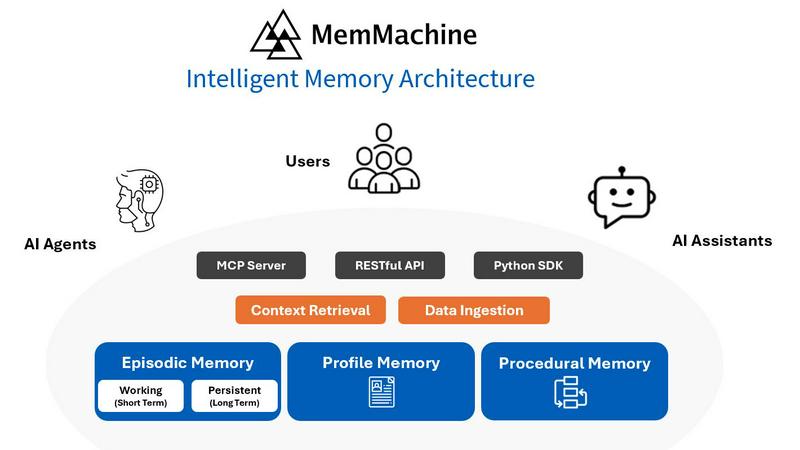
MemMachine
Project20x

Feature Comparison
MemMachine
Persistent Cross-Session Memory
MemMachine's core architecture ensures that memory is not ephemeral. It persists intelligently across multiple user sessions, different AI agents, and even various underlying large language models. This creates a continuous thread of context, allowing every new interaction to build upon the last. Your application stops repeating itself and starts recognizing returning users, recalling their past queries, preferences, and stated goals to foster a truly collaborative partnership.
Sophisticated Profile Memory
Go beyond simple chat history. MemMachine builds a dynamic, evolving user profile that captures nuanced preferences, behavioral patterns, and personal context. This feature allows agents to move from generic responses to deeply personalized interactions. For instance, an agent can remember a user's dislike for morning appointments or their specific project interests, proactively tailoring suggestions and support without the user having to restate their needs constantly.
Flexible, Open-Source Infrastructure
Built for developer teams, MemMachine offers a powerful yet flexible open-source foundation. It abstracts away the complexity of managing vector databases, graph-based entity relationships, and temporal memory systems. Teams can leverage the entire integrated memory layer or use its independent components to fit their specific architecture, enabling rapid innovation and customization without being locked into a rigid framework.
Multi-Agent Memory Synergy
MemMachine is designed for collaborative intelligence. Its memory layer can be shared and accessed by multiple specialized agents within an ecosystem. This means a research agent, a scheduling agent, and a creative agent can all work from the same unified understanding of the user. This synergy eliminates siloed information and allows a team of AI assistants to cooperate seamlessly, providing a cohesive and vastly more capable user experience.
Project20x
The Governance Layer
This foundational layer fosters collaborative policy development. It employs a ten-step AI methodology that works alongside lawmakers, analyzing legislative drafts for clarity, consistency, and potential conflicts. By providing data-driven insights and highlighting areas for improvement, it empowers teams to craft sound, coherent policies from the start, setting a strong foundation for the entire digital governance ecosystem and ensuring all stakeholders are aligned.
The Management Layer (Rules as Code)
Here, approved policies are transformed into functional, executable code through a "Rules as Code" methodology. This collaborative process turns static legal text into dynamic, automated workflows and backend processes. It ensures that the intent of the policy is accurately and efficiently implemented across government systems, reducing manual errors and freeing up agency teams to focus on higher-value tasks that require human judgment and oversight.
The Citizen Interface Layer
This layer directly facilitates public engagement by providing citizens with 24/7 access to AI agents trained on the codified policies. These agents act as knowledgeable guides, helping users navigate services, understand eligibility for benefits, or complete applications. This creates a seamless, always-available point of contact that works in synergy with government staff, enhancing service delivery and public satisfaction.
Transparency & Audit Framework
Built on a commitment to accountability, every action and automated decision within Project20x is designed to be fully traceable and quantifiable. The platform maintains a secure, immutable record of processes, ensuring that all activities are subject to rigorous human oversight and audit. This collaborative framework of checks and balances builds essential public trust and provides teams with clear data for continuous improvement.
Use Cases
MemMachine
Personalized Healthcare Assistants
Transform standard healthcare chatbots into compassionate, context-aware partners. A MemMachine-powered assistant can remember a patient's medical history, appointment preferences, medication concerns, and even personal challenges like difficulty fasting. This enables it to schedule appointments proactively, offer tailored preparation advice, and provide consistent, empathetic support across all interactions, greatly improving patient experience and adherence.
Creative and Analytical Co-Pilots
Elevate tools for writers, researchers, and analysts. A co-pilot with persistent memory can learn a user's writing style, reference past articles and data sources, understand ongoing project themes, and recall previous feedback. This allows it to offer highly relevant suggestions, maintain narrative consistency, and challenge the user's thinking based on established patterns, acting as a true collaborative partner in the creative process.
Intelligent Customer Support Systems
Move beyond scripted ticket responses. Support agents powered by MemMachine can access a complete history of a customer's issues, product usage, and past solutions. This allows for rapid, accurate problem-solving without asking the customer to repeat information. The agent can also personalize support based on the customer's technical proficiency and preferences, building loyalty and reducing frustration through seamless, remembered service.
Proactive Team Collaboration Agents
Build AI teammates that enhance group productivity. An agent like Teamate uses MemMachine to understand team dynamics, project histories, individual responsibilities, and past decisions. It can then proactively surface relevant information, automate follow-up tasks based on meeting context, and facilitate collaboration by ensuring every team member and AI assistant operates from a shared, persistent memory of project goals and progress.
Project20x
Streamlining Benefit Application & Eligibility
Agencies like the USDA or Department of Education can use Project20x to codify complex benefit program rules. Citizens can then interact with an AI agent to get instant, accurate guidance on eligibility and application steps, dramatically reducing wait times and confusion while allowing agency staff to manage complex exceptions and provide personalized support where it's most needed.
Legislative Drafting and Analysis
Lawmakers and their teams can leverage the Governance Layer as a collaborative drafting partner. The AI analyzes proposed bills for logical gaps, conflicts with existing statutes, and clarity of language. This synergistic review process helps produce more robust, implementable legislation from the outset, fostering better outcomes and smoother execution.
Automated Regulatory Compliance
For agencies such as the DOC managing business regulations, Project20x can automate compliance checks and reporting workflows. By turning regulations into code, businesses can interact with self-service portals to understand requirements, while agencies gain efficient tools for monitoring and enforcement, creating a more cooperative regulatory environment.
Public Information and Crisis Response
During events requiring rapid public communication, like a health advisory or disaster response led by agencies such as FEMA or USAID, the platform's AI agents can be instantly updated with new guidelines. They provide the public with consistent, accurate, and around-the-clock information, working in tandem with human communicators to manage volume and ensure reliable information dissemination.
Overview
About MemMachine
MemMachine is the foundational, open-source memory layer engineered for developers and teams building the next generation of collaborative AI agents. It solves the pervasive "amnesia" problem in AI applications, where each interaction traditionally starts from a blank slate, by providing a persistent, shared memory that lasts across sessions. This transforms static tools into dynamic partners that evolve in synergy with users. At its core, MemMachine enables AI-powered applications to learn, store, and intelligently recall data, preferences, and context from past interactions. This continuous memory allows your agents to build sophisticated and evolving user profiles, leading to profoundly more relevant, personalized, and intelligent responses. Designed for engineering teams at the forefront of the AI revolution, MemMachine is the critical infrastructure for creating context-aware assistants—from customer support bots to creative co-pilots and complex analytical systems—that truly understand a user's history and work collaboratively towards deeper, more meaningful engagement.
About Project20x
Project20x is a collaborative, AI-native platform built to fundamentally transform how governments operate and engage with citizens. We believe that by working together, agencies, lawmakers, and the public can create a more efficient, transparent, and responsive government. Our platform acts as a synergistic bridge, translating complex legal and regulatory frameworks into clear, actionable digital processes that everyone can understand and use. Designed for government agencies, policymakers, and citizens alike, Project20x operates through three integrated layers: Governance, Management, and Interface. This structure ensures that from the initial drafting of a policy to its final implementation and public interaction, every step is connected, coherent, and built for teamwork. Our core value proposition lies in making governance quantifiable, traceable, and accessible, fostering an environment where human expertise and AI efficiency work in concert to build public trust and streamline operations for a better societal outcome.
Frequently Asked Questions
MemMachine FAQ
What is the "amnesia" problem in AI that MemMachine solves?
The "amnesia" problem refers to the standard behavior of AI applications, particularly chatbots, that treat each user interaction as an isolated event with no memory of past conversations. This forces users to re-explain their context, preferences, and history repeatedly. MemMachine solves this by providing a persistent memory layer that allows AI agents to learn from and recall past sessions, enabling continuous, context-aware, and personalized dialogues.
Is MemMachine tied to a specific Large Language Model (LLM)?
No, one of MemMachine's key strengths is its model-agnostic design. Its memory layer is built to work seamlessly across multiple LLMs. This means development teams can switch between or use different models (like GPT, Claude, or open-source models) for various agents or tasks, while all agents retain access to the same unified, persistent memory store, ensuring consistency and flexibility.
How does MemMachine handle user privacy and data security?
As an open-source solution, MemMachine provides transparency and control. Teams deploy and manage their own memory infrastructure, keeping all user data within their own secure environment. This allows organizations to implement their specific data governance, encryption, and compliance policies directly, ensuring that sensitive information used for personalization is handled according to their strictest security standards.
Can MemMachine be integrated into existing applications?
Absolutely. MemMachine is designed as a developer-friendly layer that can be integrated into existing AI-powered applications and agent frameworks. Its flexible architecture and open-source nature allow engineering teams to adopt it incrementally—whether they want to replace an entire memory system or enhance specific parts of their application with persistent profile memory or cross-agent recall capabilities.
Project20x FAQ
How does Project20x ensure human oversight remains central to governance?
Project20x is designed as a collaborative tool, not a replacement for human judgment. The AI provides analysis, automation, and access, but all critical decisions, policy approvals, and complex case reviews are reserved for human officials. Our Transparency & Audit Framework ensures every automated process is traceable and subject to human review, maintaining a synergistic human-in-the-loop model.
What is "Rules as Code" and how does it work?
Rules as Code is a methodology where legal rules and policies are authored in a precise, machine-readable format alongside traditional legal text. In Project20x's Management Layer, this allows policies to be directly translated into software code. This creates a single source of truth, ensuring that the digital service citizens interact with is an accurate, real-time reflection of the law as passed, reducing misinterpretation.
Is citizen data secure on the Project20x platform?
Absolutely. Security and data privacy are foundational to our platform. We employ enterprise-grade security protocols, encryption, and compliance frameworks designed for government use. All data handling follows strict governance policies, and our transparent audit trails provide clear records of data access and usage, ensuring citizen information is protected through collaborative vigilance.
Can Project20x integrate with existing government IT systems?
Yes, a core part of our collaborative approach is building for interoperability. Project20x is designed with APIs and modular architecture to connect with legacy systems and modern platforms alike. Our team works in partnership with agency IT departments to ensure a smooth, synergistic integration that enhances current capabilities without requiring a complete system overhaul.
Alternatives
MemMachine Alternatives
MemMachine is an open-source memory layer designed for AI agents, enabling them to learn from past interactions and build evolving user profiles. It belongs to the category of tools that provide persistent context and collaborative intelligence for AI applications. Developers and teams often explore alternatives for various reasons. These can include specific budget constraints, the need for different feature sets like specialized integrations or advanced security models, or requirements for a managed service versus a self-hosted solution. The ideal platform depends heavily on a project's unique technical stack and long-term goals. When evaluating options, it's crucial to consider core capabilities. Look for a solution that offers true persistence across sessions, flexibility to work with your chosen AI models, and a design that fosters synergy between multiple agents. The goal is to find a memory layer that acts as a collaborative foundation, allowing your AI tools to grow in intelligence alongside your users.
Project20x Alternatives
Project20x is a specialized AI governance platform designed to help government entities translate complex policies into clear, actionable digital workflows. It falls within the broader category of AI assistants and governance tools, focusing on public sector transformation. Organizations often explore alternatives for various reasons, such as specific budget constraints, the need for different feature sets, or integration requirements with existing legacy systems. The search for the right tool is a collaborative effort to find the best fit for a team's unique operational landscape and strategic goals. When evaluating options, it's wise to consider how a solution handles policy codification, ensures transparency and security, and facilitates citizen engagement. The ideal partner will offer a synergistic approach that aligns with your agency's commitment to modern, accountable, and effective public service.