MakerHunt vs Tickari
Side-by-side comparison to help you choose the right product.

MakerHunt
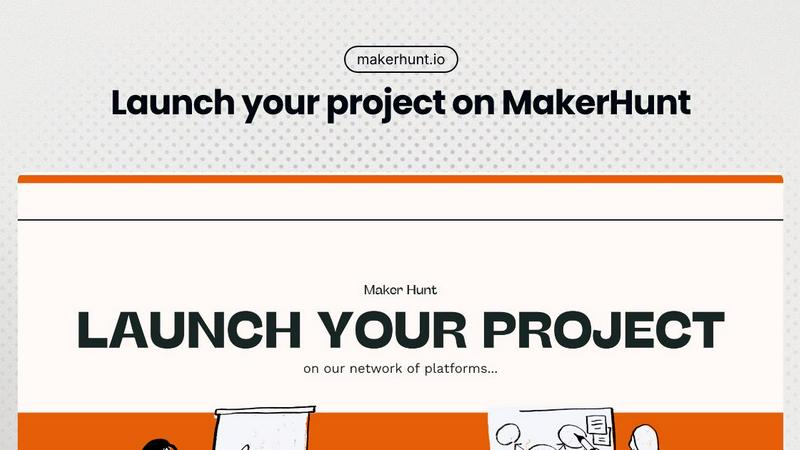
Makerhunt is an Weekly launch platform for makers and builders. Ship your product, collect votes, and get in front of makers and early adopters.

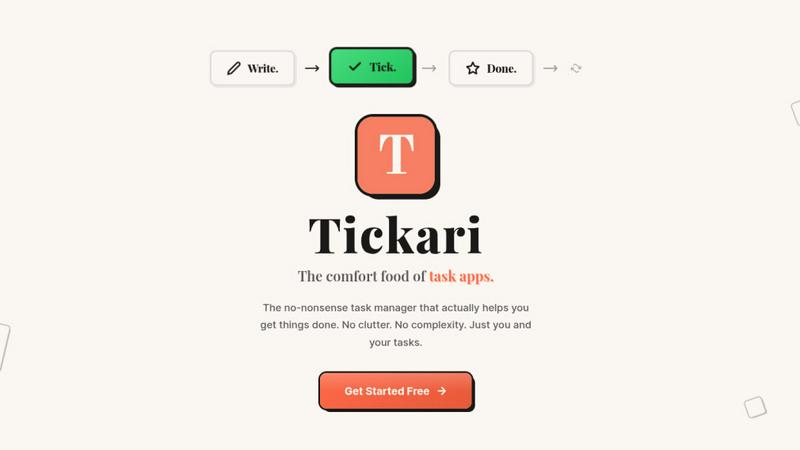
The no-nonsense task manager that actually helps you get things done. No clutter. No complexity. Just you and your tasks.
Visual Comparison
MakerHunt
Tickari
Overview
About MakerHunt
MakerHunt is a weekly launch platform for makers and builders to showcase products, gather real user votes, and reach early adopters.
Key Features
Discover: Get featured in weekly launches and gain visibility.
This Week’s Hunt: Premium spotlight posts to highlight your product.
Weekly Hunts: One focused hunt each week with real feedback from early users.
Past Hunts: Explore previous weekly and monthly launches for insights.
Top Categories: Easily browse trending product categories.
Use Cases
Individuals & Small Teams: Stay organized, reduce guesswork, and launch efficiently.
Professionals & Larger Teams: Use as a reliable platform to scale launches and improve decision-making.
Benefits
Clear Outcomes: Structured features simplify the launch process.
Time Savings: Focus on building while MakerHunt handles discovery.
Better Decisions: Real feedback helps validate ideas.
Easy to Use: Simple interface suitable for all skill levels.
Pricing
$19 per launch: Simple, transparent pricing with no subscriptions.
Conclusion
MakerHunt offers a streamlined way to launch, discover, and evaluate products weekly—helping makers grow faster with clarity and real user feedback.
About Tickari
Tickari is a deliberately minimal, no-nonsense task manager designed for people who are tired of overcomplicated productivity tools and just want to get things done. Instead of overwhelming you with features like complex boards, AI-generated suggestions, or endless customization, Tickari focuses on a simple, frictionless workflow: write a task, tick it off, and move on.
The product embraces a “less but better” philosophy—eliminating clutter, reducing cognitive overhead, and removing the need for onboarding tutorials or setup processes. There are no distractions, no unnecessary decisions, and no feature bloat—just a clean interface that works instantly the moment you open it. This makes it particularly effective for users who feel stuck organizing tasks instead of actually completing them.