Jottler vs Patrivox
Side-by-side comparison to help you choose the right product.

Jottler
Jottler automates SEO tasks for busy founders, boosting organic traffic effortlessly through smart content creation and publishing.
Last updated: March 26, 2026

Patrivox
Patrivox uses AI to help your team unlock and share searchable knowledge from your archives.
Last updated: March 4, 2026
Visual Comparison
Jottler
Patrivox
Feature Comparison
Jottler
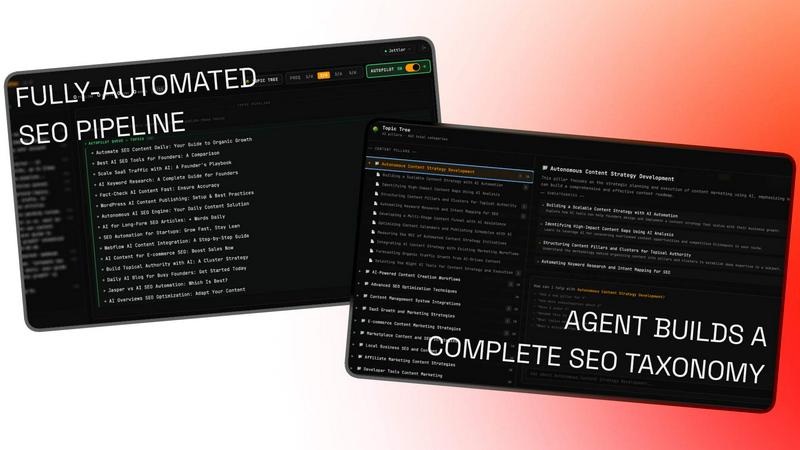
Fully Automated SEO Content Pipeline
Jottler’s fully automated SEO content pipeline continuously discovers keyword opportunities and plans topics, generating optimized articles for your blog without manual intervention. This ensures a steady stream of relevant content that aligns with your audience's interests.
AI-Powered Keyword Research & Content Planning
With AI-driven keyword research, Jottler identifies high-value search opportunities and establishes a long-term content strategy tailored to your niche. This feature empowers users to focus on strategic growth while Jottler handles the research intricacies.
Direct CMS Publishing
Jottler allows users to publish articles directly to various content management systems like WordPress and Webflow, eliminating the need for manual copy-pasting. This integration streamlines the publishing process, making content delivery efficient and hassle-free.
Rich, Structured Content
Every article generated by Jottler is rich with structured elements, including images, formatting, internal links, and SEO-optimized layouts. This attention to detail enhances user engagement and improves search engine visibility, ensuring articles are both informative and appealing.
Patrivox
Automation & Intelligent Processing
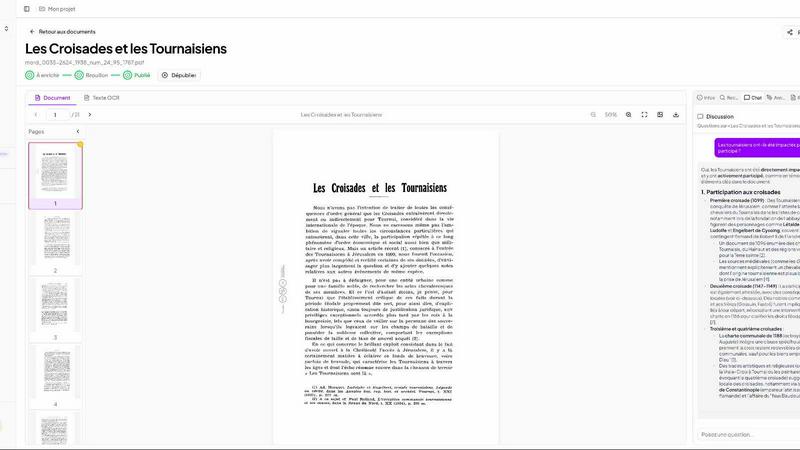
Patrivox streamlines team workflows through powerful automation. Simply drag and drop hundreds of PDFs in a batch, and the platform takes over. Utilizing Mistral AI, it performs advanced OCR to extract every word, then automatically identifies and classifies entities like names, locations, and dates. This eliminates the need for manual data entry and configuration, allowing your collective efforts to focus on analysis and insight rather than tedious indexing.
Intelligent Search & AI Chat
Foster a cooperative research environment with powerful search tools. Teams can perform instant, typo-tolerant full-text searches across the entire archive. For more nuanced inquiry, members can ask questions in plain language through the AI chat interface. The AI provides concise answers directly sourced from your documents, complete with citations, enabling faster discovery and collaborative verification of information.
Interactive Knowledge Graph (Constellation)
Uncover hidden narratives and relationships within your archives through the Constellation feature. This interactive knowledge graph visually maps every person, place, and organization identified by the AI, showing how they are connected across different documents. Teams can navigate from node to node, discovering non-obvious links and patterns that would be impossible to find manually, sparking new avenues for cooperative research.
Sovereign European Hosting & Sharing
Collaborate with confidence knowing your data is secure and compliant. Patrivox is 100% hosted in Europe and built to be GDPR-native from the ground up, featuring comprehensive audit logs. The platform supports seamless sharing, allowing unlimited readers to access the knowledge base while providing controlled administrative roles for team members, making it easy to open your archives to researchers or the public.
Use Cases
Jottler
Content Marketing for Startups
Jottler provides startups with a robust platform for executing their content marketing strategies. By automating keyword research and content generation, startups can maintain a consistent online presence and engage their target audience effectively.
SEO Optimization for Small Businesses
Small businesses can leverage Jottler to enhance their SEO efforts without hiring dedicated SEO personnel. The automated pipeline helps them identify relevant keywords and create optimized content that drives organic traffic to their websites.
Blogging for Founders
Founders can use Jottler to establish thought leadership in their industries by regularly publishing high-quality blog posts. The platform enables them to focus on their primary business responsibilities while ensuring their content strategy remains active and effective.
Multi-Language Content Creation
Jottler supports content creation in multiple languages, making it ideal for businesses operating in diverse markets. This feature allows companies to reach broader audiences and cater to different linguistic demographics seamlessly.
Patrivox
Municipal Archives
Municipal teams can cooperate to digitize and bring to life their collections of deliberations, civil registers, and historical correspondence. Patrivox makes these documents fully searchable, allowing staff to serve public inquiries in seconds and enabling historians to conduct research through a shared, accessible platform, thus enhancing civic transparency and historical preservation.
Historical Societies & Associations
Volunteers and researchers within societies can synergize their efforts to manage bulletins, newsletters, and documentary collections. By automating the indexing process, Patrivox alleviates the burden of manual work, allowing members to quickly find information, ask the AI complex questions about their holdings, and share their enriched archives with a wider audience.
Heritage Libraries & Special Collections
Libraries can open their special collections to cooperative research without risking fragile originals. Patrivox allows librarians and researchers to work together in a digital space, where rare books, manuscripts, and pamphlets are made searchable and explorable through the knowledge graph, fostering new academic collaborations and public engagement.
Diocesan & Parish Archives
Diocesan teams and parish historians can collaborate on preserving invaluable registers, ecclesiastical documents, and historical records. Patrivox helps identify and connect names and places across centuries, simplifying genealogical research for the public and providing clergy with a shared, organized system to access their institutional memory.
Overview
About Jottler
Jottler is an autonomous AI SEO agent designed to streamline the content creation and publishing process, specifically targeting founders, startups, and small teams. With Jottler, users can efficiently grow organic traffic without the complexities typically associated with SEO and content marketing. The platform automates the entire workflow, from keyword discovery to article publishing, allowing users to focus on their core business activities. By leveraging advanced AI capabilities, Jottler continuously identifies high-value keywords, crafts high-quality blog posts, and publishes them directly to your website. This seamless process not only enhances your online presence but also builds topical authority, driving consistent organic traffic growth. Jottler's innovative features ensure that content is not only relevant but also optimized for search engines, making it an invaluable tool for anyone looking to elevate their digital marketing strategy.
About Patrivox
Patrivox is a collaborative European SaaS platform designed to unlock the collective knowledge hidden within physical archives and scanned document collections. It serves as a powerful, shared brain for organizations like municipal archives, historical societies, heritage libraries, and associations. By working in synergy, teams can effortlessly transform thousands of unsearchable PDF pages into a dynamic, intelligent knowledge base. The platform leverages cutting-edge Mistral AI to perform next-generation OCR and automatically identify key entities such as people, places, and organizations. This process not only makes every word searchable in seconds but also maps the connections between them in an interactive knowledge graph. Patrivox's core value proposition is fostering cooperation between information and people; it breaks down silos by making historically inaccessible archives instantly searchable via full-text search or natural language questions, enabling seamless sharing with researchers, team members, and the public. Built with sovereignty in mind, it is 100% hosted in Europe and GDPR-native, ensuring that collaborative work meets the highest data protection standards.
Frequently Asked Questions
Jottler FAQ
How does Jottler automate the content creation process?
Jottler automates content creation by utilizing AI to research keywords, plan topics, and generate articles. This end-to-end automation allows users to focus on strategy while Jottler handles the execution.
Can Jottler integrate with my existing CMS?
Yes, Jottler integrates seamlessly with popular content management systems such as WordPress and Webflow, allowing users to publish articles directly without any manual work.
What types of content can Jottler create?
Jottler specializes in creating long-form, high-quality articles that are SEO-optimized and rich in structured content, including images and internal links, ensuring that each piece is engaging and informative.
Is Jottler suitable for teams with limited SEO expertise?
Absolutely. Jottler is designed for founders, startups, and small teams, making it accessible even for those with limited SEO expertise. The platform simplifies complex SEO processes, allowing users to benefit from effective content marketing effortlessly.
Patrivox FAQ
How does Patrivox handle data privacy and security?
Patrivox is built on a foundation of data sovereignty and security. The entire platform is hosted on servers located within the European Union. It is designed to be fully compliant with GDPR regulations by default, incorporating principles like data minimization and providing comprehensive audit logs. Your documents and the data extracted from them never leave European jurisdiction.
What is the "Constellation" or knowledge graph feature?
The Constellation is an interactive visual map of the people, places, and organizations found in your documents. The AI doesn't just list these entities; it intelligently maps the relationships between them, showing how they are connected across different documents. This allows teams to visually explore their archives, discovering non-obvious links and narratives that traditional search cannot reveal.
Can I try Patrivox before committing to a paid plan?
Yes, absolutely. Patrivox offers a free "Decouverte" plan to encourage teams to experience its collaborative benefits firsthand. This plan includes 100 trial pages, 50 AI queries, and support for one administrator with unlimited readers. No credit card is required to start, allowing your team to test the workflow from upload to insight without any obligation.
What happens if I exceed my plan's page or query limit?
If your collaborative project grows and you exceed your current plan's page limit, you will need to upgrade to a higher tier to upload more documents. For AI queries, once the monthly allowance is used, the AI chat feature will be unavailable until the next billing cycle resets the count, though the full-text search and knowledge graph will remain fully accessible.
Alternatives
Jottler Alternatives
Jottler is an innovative AI-driven SEO tool designed specifically for busy founders, startups, and small teams. It simplifies the complex world of SEO and content marketing by automating the entire content creation process, from keyword research to blog post publication. This makes it an invaluable resource for those looking to enhance their organic traffic without the hassle of managing multiple tasks. Users often seek alternatives to Jottler for a variety of reasons, such as pricing constraints, specific feature requirements, or compatibility with their existing platforms. When exploring alternatives, it's essential to consider factors like ease of use, the comprehensiveness of the SEO features, and the level of automation offered. Finding a tool that aligns with your team's needs and workflow can significantly enhance your content marketing efforts and drive better results.
Patrivox Alternatives
Patrivox is a powerful AI-driven platform in the document intelligence and content automation space. It specializes in transforming scanned documents and PDFs into a fully searchable digital knowledge base, making it invaluable for teams managing large archives. Teams often explore alternatives for various reasons, such as aligning with specific budget constraints, needing different integration capabilities, or requiring a platform tailored to a particular industry's workflow. It's a natural part of finding the right collaborative fit for an organization's unique ecosystem. When evaluating other solutions, focus on core needs like the accuracy of text extraction (OCR), the depth of search functionality, and how well the platform facilitates team-wide access and knowledge sharing. The goal is to find a tool that seamlessly integrates into your team's workflow, enhancing collective productivity without creating new hurdles.