finban vs Tickari
Side-by-side comparison to help you choose the right product.

finban empowers you to plan liquidity confidently, ensuring informed decisions on hiring, taxes, and investments.
Last updated: February 28, 2026

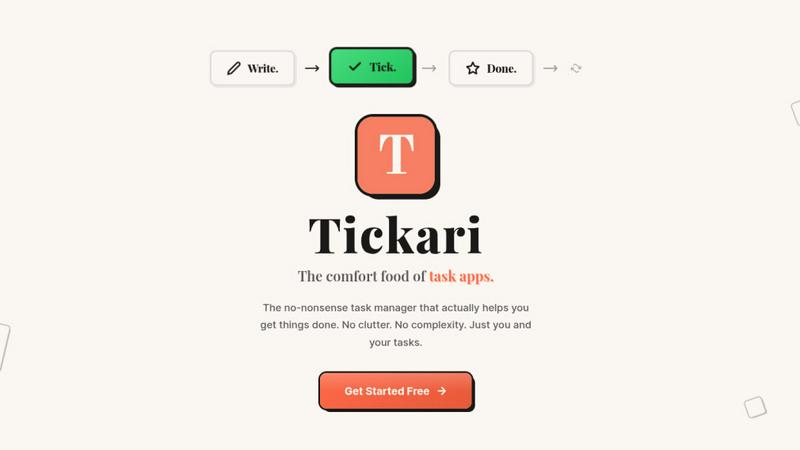
The no-nonsense task manager that actually helps you get things done. No clutter. No complexity. Just you and your tasks.
Visual Comparison
finban

Tickari
Overview
About finban
finban is a comprehensive liquidity planning tool designed to act as a CFO in your pocket, empowering businesses to make informed financial decisions with confidence. It caters to entrepreneurs, finance managers, and business owners who need a streamlined solution for managing their cash flow, budgets, and financial forecasts. With finban, users can easily visualize their cash inflows and outflows, enabling them to plan for hiring, taxes, projects, and investments without the chaos often associated with Excel spreadsheets. The platform simplifies complex financial data, providing a clear overview of a company's financial health, thus facilitating timely and strategic decision-making. By consolidating various financial metrics and integrating with popular tools, finban enhances collaboration and ensures that businesses are always prepared for future challenges.
About Tickari
Tickari is a deliberately minimal, no-nonsense task manager designed for people who are tired of overcomplicated productivity tools and just want to get things done. Instead of overwhelming you with features like complex boards, AI-generated suggestions, or endless customization, Tickari focuses on a simple, frictionless workflow: write a task, tick it off, and move on.
The product embraces a “less but better” philosophy—eliminating clutter, reducing cognitive overhead, and removing the need for onboarding tutorials or setup processes. There are no distractions, no unnecessary decisions, and no feature bloat—just a clean interface that works instantly the moment you open it. This makes it particularly effective for users who feel stuck organizing tasks instead of actually completing them.