Dreamspoken vs Tickari
Side-by-side comparison to help you choose the right product.

Dreamspoken
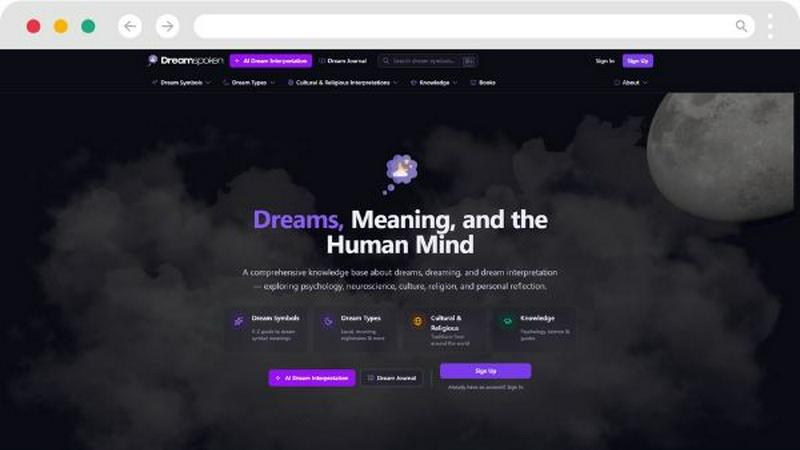
Dreamspoken transforms your understanding of dreams with tools for analysis, interpretation, and sleep science.
Last updated: February 28, 2026

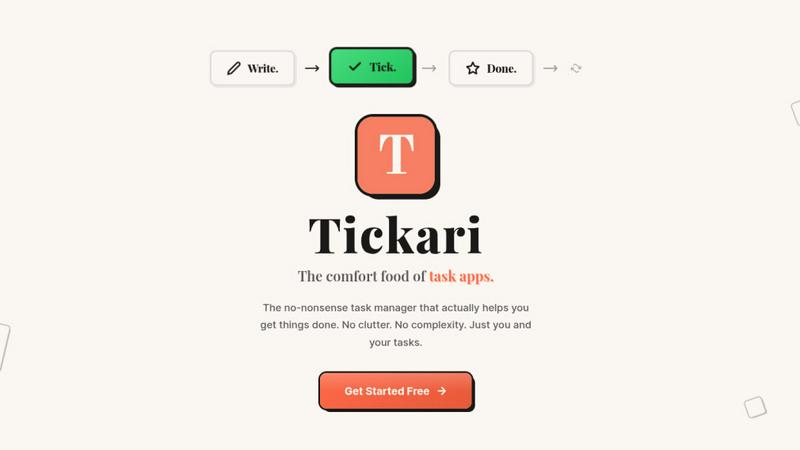
The no-nonsense task manager that actually helps you get things done. No clutter. No complexity. Just you and your tasks.
Visual Comparison
Dreamspoken
Tickari
Overview
About Dreamspoken
Dreamspoken is an innovative online knowledge platform that delves into the fascinating world of dreams, dreaming, and dream interpretation. Designed for individuals interested in understanding their subconscious, Dreamspoken offers a rich tapestry of educational resources covering dream psychology, sleep science, and the cultural and historical significance of dreams. The platform emphasizes a personalized approach to dream analysis, refraining from providing fixed meanings and instead encouraging users to explore their dreams as unique psychological experiences influenced by memory, emotion, and life contexts. Users can access a structured library of common dream symbols and scenarios, along with informational resources that enhance reflection and understanding of their dream experiences. Additionally, Dreamspoken features an AI-based dream analysis tool and a private dream journal, allowing users to document and review their personal dream journeys over time, fostering deeper insight and connection to their subconscious.
About Tickari
Tickari is a deliberately minimal, no-nonsense task manager designed for people who are tired of overcomplicated productivity tools and just want to get things done. Instead of overwhelming you with features like complex boards, AI-generated suggestions, or endless customization, Tickari focuses on a simple, frictionless workflow: write a task, tick it off, and move on.
The product embraces a “less but better” philosophy—eliminating clutter, reducing cognitive overhead, and removing the need for onboarding tutorials or setup processes. There are no distractions, no unnecessary decisions, and no feature bloat—just a clean interface that works instantly the moment you open it. This makes it particularly effective for users who feel stuck organizing tasks instead of actually completing them.