AskFormulas vs Miget
Side-by-side comparison to help you choose the right product.

AskFormulas
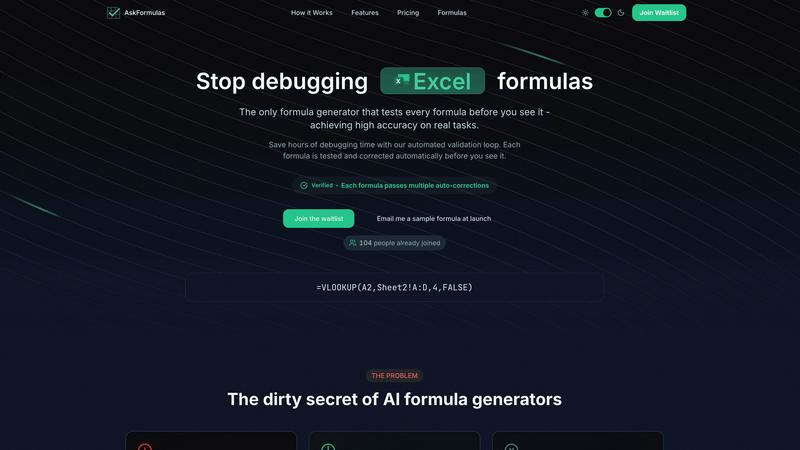
AskFormulas generates and validates Excel and Sheets formulas, saving your team valuable time and ensuring accuracy.
Last updated: February 28, 2026

Miget
Deploy unlimited services on one flat-rate plan.
Visual Comparison
AskFormulas
Miget
Overview
About AskFormulas
AskFormulas is an innovative tool crafted to alleviate the common frustrations associated with broken Excel formulas. It stands out in the crowded landscape of AI formula generators by ensuring that every formula undergoes rigorous validation before reaching the user. Unlike many competitors that can present formulas with error rates between 40% and 60%, AskFormulas guarantees accuracy by testing each formula on real data. This commitment to precision makes it invaluable for a wide array of users, including financial analysts, revenue managers, and small to medium-sized business owners, as well as anyone looking to streamline their spreadsheet tasks. The core value proposition of AskFormulas lies in its automated validation feature, which significantly reduces the time spent on debugging. With a user-friendly interface that supports natural language input, users can effortlessly generate verified formulas in mere seconds, regardless of their Excel proficiency. By eliminating error-ridden formulas and enhancing productivity, AskFormulas empowers users to focus on analysis and decision-making rather than troubleshooting.
About Miget
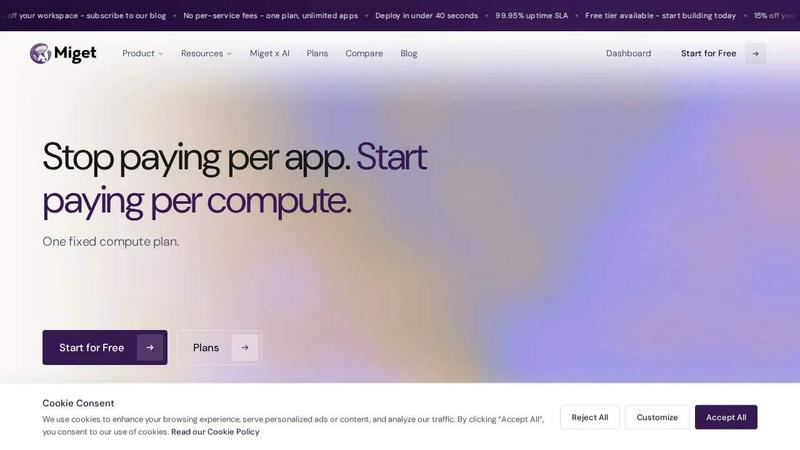
Miget – Stop paying per app. Start paying per compute.
Traditional PaaS platforms charge you for every app, database, and worker separately. Miget flips that model: pick a fixed compute plan, then deploy as many services as you want inside it.
- Unlimited apps, databases, and background workers per plan
- No per-service billing surprises
- Built on Kubernetes with full isolation between tenants
- Deploy from Git, GitHub, Registry with zero-config builds
- Managed PostgreSQL, Redis, and more
- Custom domains with automatic TLS
Whether you're running a single side project or a full production stack, you only pay for the compute you reserve—not the number of things you run on it.