AllForms vs Miget
Side-by-side comparison to help you choose the right product.

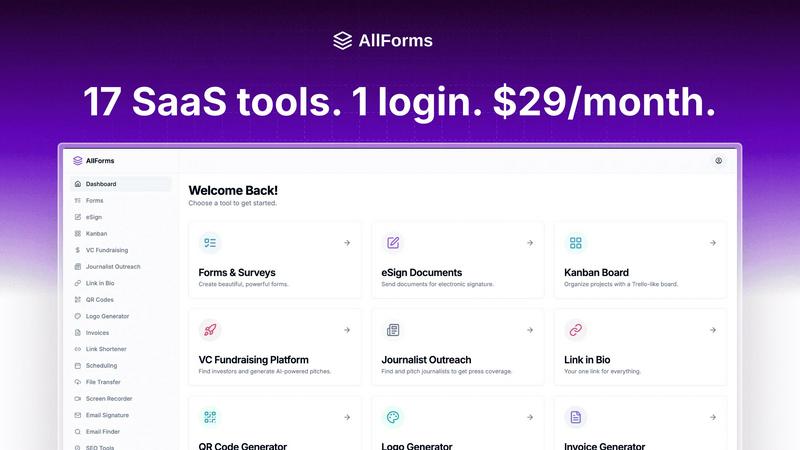
Unite your team with 17 essential tools in one seamless, affordable platform.
Last updated: March 1, 2026

Miget
Deploy unlimited services on one flat-rate plan.
Visual Comparison
AllForms
Miget
Overview
About AllForms
AllForms is the ultimate collaborative platform designed to unify your team's essential tools and eliminate the friction of disconnected workflows. It's a revolutionary all-in-one SaaS solution that consolidates the core functionalities of 17+ expensive, standalone applications into a single, seamless, and beautiful interface. Built for modern businesses and forward-thinking teams, AllForms empowers professionals across sales, marketing, operations, and leadership to work together more effectively by breaking down software silos. Its core value proposition is profound synergy: by replacing a costly patchwork of subscriptions—from e-signing and scheduling to AI chat and SEO tools—teams can achieve unparalleled operational harmony. This consolidation not only drives massive cost savings, exceeding $14,000 annually, but also enhances collective productivity, ensures data continuity, and simplifies management. AllForms is tailored for any team tired of juggling multiple logins, exporting/importing data, and suffering from clunky, slow tools. It fosters a cooperative environment where every function, from client contracts to marketing outreach, is interconnected, allowing the entire organization to focus on shared goals and accelerated growth.
About Miget
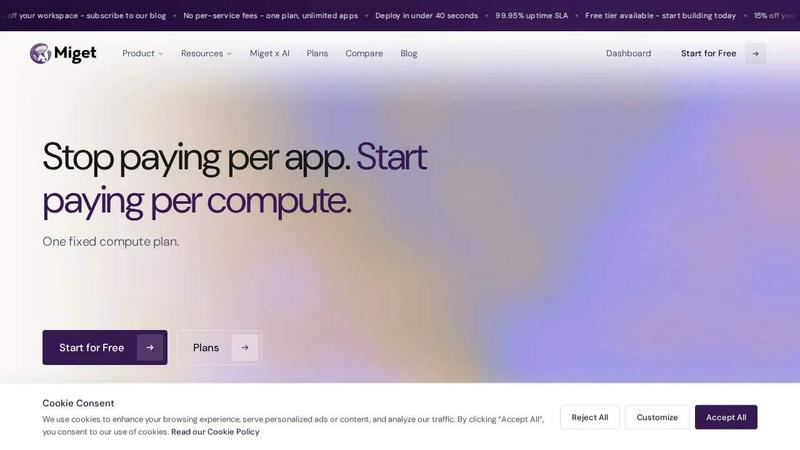
Miget – Stop paying per app. Start paying per compute.
Traditional PaaS platforms charge you for every app, database, and worker separately. Miget flips that model: pick a fixed compute plan, then deploy as many services as you want inside it.
- Unlimited apps, databases, and background workers per plan
- No per-service billing surprises
- Built on Kubernetes with full isolation between tenants
- Deploy from Git, GitHub, Registry with zero-config builds
- Managed PostgreSQL, Redis, and more
- Custom domains with automatic TLS
Whether you're running a single side project or a full production stack, you only pay for the compute you reserve—not the number of things you run on it.